
Blog article
From 70/20/10 to 90/10: Redesigning learning for the AI era
The 90/10 model reframes workplace learning: 90% through AI support in workflow, 10% through high-touch human development.


In August 2026, Betterworks surveyed 521 HR and business leaders at Director level or above in the US and UK. It found that 92% rate their managers effective where the organization offers real-time coaching and enablement (support that reaches a manager while the work is happening) or treats manager effectiveness as a strategic priority. Where the organization relies on periodic training or leaves managers to figure it out, the figure is 76%. The gap widens on readiness: 86% of leaders in the first group say their managers are prepared for the future of work, against 65% in the second. These are leaders rating the managers in their own organizations, so the gap is an association between support and ratings.
That association hands CHROs and heads of L&D a concrete budget question: how much manager-development spend reaches a manager at the moment a priority changes or a hard conversation starts.
The survey asked how organizations support their managers, and the answers split four ways. Forty percent say managers receive periodic training with limited ongoing support, and 19% say managers are expected to figure it out on their own. Twenty-four percent say the organization provides real-time coaching and enablement, and another 17% treat manager effectiveness as a strategic priority.
The last two groups together make up 41% of respondents and the first two make up 59%. The 92% rating belongs to the 41%, and the 76% rating belongs to the 59%. The single most common answer is periodic training with limited ongoing support, a training event followed by little help in between.
Leaders say the role is growing on every front. Eighty-six percent say leading through change and coaching employees have both become more important over the past three years, 85% say the same of employee development, and 82% say the same of AI-enabled work. On top of that, 78% say managers already oversee people who work with AI tools or AI agents, and 47% say managers now oversee larger teams.
A manager announcing a reorg on Thursday needs help on Wednesday, with context on what just changed and what to say next. Real-time support is built for that Wednesday, and last spring's workshop is a long way from it.
The survey also asked what is most likely to keep managers from being more effective. Leaders put constant change first at 48% and too many priorities second at 40%, followed by lack of AI skills (33%), conflicting priorities (31%) and administrative burden (29%). Lack of manager training came last among the named barriers, at 25%.
Friction shows up in leadership expectations (48%), communication (43%) and performance management (40%). Ownership is split as well: 64% of HR leaders say improving manager effectiveness is primarily HR's job, and 32% of business leaders agree, while business leaders point to executive leadership (62%) and strategy (52%). Priorities that shift constantly create a steady stream of moments when a manager needs fresh direction, and each of those moments is a chance for support to arrive on time.
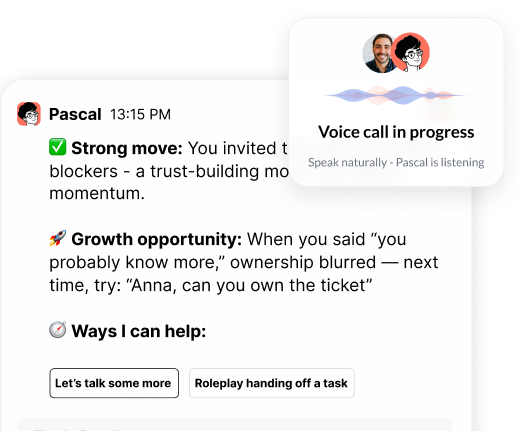
At Pinnacle, we build for that Wednesday. Pascal, Pinnacle's AI coach, joins a manager's meetings, including the ones where the manager leads the team through change, and coaches the manager afterward on what happened in the room. Each person's coaching conversations with Pascal stay private. HR and executives see aggregated, anonymized insights, and only for groups large enough to protect anonymity.
For CHROs and heads of L&D, the near-term task is to list every manager-development line item and mark how much of it reaches a manager in the week a priority changes or a hard conversation begins. A 16-point gap in how leaders rate their managers is reason enough to look at the budget with fresh eyes. The line items that land in those weeks show where support already works, and the thin spots show where to add it.



“Thank you for setting the great foundation for my promotion; now I have a plan!"

Curious to see how AI Coaching can 10X the impact and scale of your development initiatives. Book a demo today for: