Ask the people running AI rollouts what makes or breaks them, and they keep landing on the same answer: whether people are motivated to use AI. And fear sits right in the middle of that. Here's the encouraging part. When the HR Strategy Forum's AI Collaboratory dug into those fears with HR practitioners, the fears turned out to be specific, and a fear you can name is a fear you can plan for. Below are the moves that help, drawn from what practitioners saw work and what the Collaboratory's October working paper, The People Strategy for AI Adoption, recommends. (The paper's four-stage maturity curve gets its own explainer: The AI maturity curve explained.)
Start by naming the fear
The Collaboratory heard 22 distinct fears about AI at work from people at 79 organizations, and the paper sorts them into seven groups. Put in plain words, each group is a question people are asking. Will I still have a job? Will my skills still count, and will I still feel like me at work? What will colleagues think if I use it? Who takes the blame when it gets something wrong? Will it pile more review work on me? Does this sit right with my values? And can I take one more change? Some people put it bluntly: using AI "feels like cheating," or it will "dumb me down." For a leader, that turns a vague mood into a short list of questions, and every one of them has a real answer.
Once you know which fear you're dealing with, you can answer it directly. If people fear for their jobs, say what the rollout is for. If they wonder whether AI is worth their time, make it specific to their work. Telling people to "use AI" motivates few of them. Seeing what AI does for their own job, and having time to try it, motivates most.
Practitioners saw tools and mandates get people using AI. The people who went further, sharing what they learned and redesigning their own work, were the ones who believed AI made that work better and trusted what the company was after.
Say what the rollout is for before you mandate it
Using AI is a choice people make many times a day, and each time it comes down to whether they trust what the company is really after. When employees suspect AI is a headcount exercise, they underreport the time it saves and hold back effort. A breakout participant in the second session put the stakes plainly: "If I invest in this, am I going to be able to pay my mortgage?"
So say out loud what AI is for in each team before any mandate, and only promise what you can keep.
An HR leader in the second session suggested helping leaders ask "what else can you do now that you have this capacity?" and said "that then reduces the anxiety."
Let leaders go first, mistakes included
The strongest signal practitioners described is leaders using AI in the open. Leaders who share their own AI mistakes along with their wins make it safe for everyone else to try. Teams just starting out need two more moves: name the anxiety out loud, and give people dedicated time to experiment.
Watch for hope turning into overload
Even good motivators can backfire. People hope AI will bring better work-life balance, and that hope turns into overload when AI adds review work. Watch for "brain fry" as review work piles up. Reward validated use, meaning AI output a person has actually checked, and set norms for when people say they used AI.
Give people a hand in shaping the change
People commit to a change they helped shape, and rules a team sets for itself are easier to live with. A breakout participant in the second session said, "Make sure they feel like they're a part of the process. It's not happening to them."
Equip managers to hold the conversation
A first-session panelist put it bluntly: "Top-down got us so far… nothing is really possible unless the frontline leaders buy in, unless they're engaged, and unless they know specifically how they're supposed to move their teams forward." A manager who explains what AI means for each role on the team, and who uses it visibly with the mistakes included, gives people answers specific to their own job.
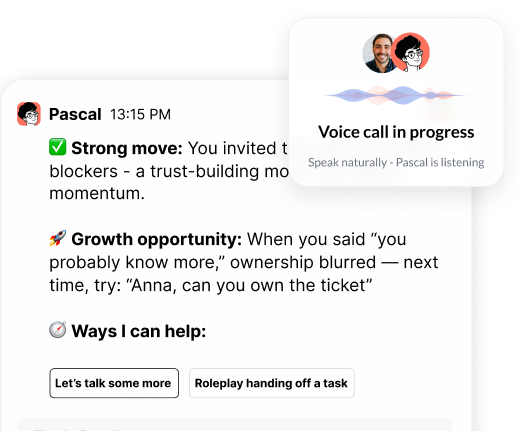
That is the kind of conversation Pascal, Pinnacle's AI coach, works on with managers: it helps them prepare and practice, and it joins managers' meetings and coaches them after important conversations, including the ones where they lead their teams through change. Each person's coaching conversations with Pascal stay private. HR and executives see aggregated, anonymized insights, and only for groups large enough to protect anonymity.
Where to start
For CHROs and heads of L&D, the near-term task is to take the seven groups of fear into each function, ask people which ones they feel, and give them an answer specific to their role on a timeline they can see. Answering fear is change management work, and the expertise in helping people adopt new behaviors sits within HR.
Source: the HR Strategy Forum's AI Collaboratory, The People Strategy for AI Adoption: An explainer and action guide to the seven human systems (working paper, version 2.4, October 2026).