Blog article


Burnout among tech workers jumped from 44.7% to 54.7% in a single year, according to a new tech worker sentiment survey from researcher Noam Seagull, discussed on Lenny's Podcast. Optimism about the future of these same roles fell from 54.8% to 48.7% over the same period. The obvious explanation would be fear of losing a job to AI. The data tells a different story.
Job loss to AI ranks second to last on the list of what tech workers say worries them most right now. What tops the list instead is the expectation to do more for the same pay.
As Seagull put it, "The speed AI unlocked got plowed straight back into expectations. Every game becomes the new baseline and the people expected to hit it are running out of room to breathe."
That pattern shows up across the survey. Nearly all respondents, 97.2%, say AI makes them better at their job. Dig deeper and "better" mostly means faster, not sharper. People report shipping more work in less time, alongside a quieter worry that the quality of that work, and their own judgment, is slipping. Seagull's report names this directly: "The productivity gains are real, but the quality of the work and the sharpness of the person producing it are taking a hit."
The workforce also splits close to 50/50 on identity. Half feel amplified by AI, energized and building things they couldn't before. The other half feel destabilized or diminished, watching roles that used to feel stable shift under them. Only 3% say AI hasn't changed how they see themselves at all.
Buried inside the survey is a number people leaders should sit with closely. Manager effectiveness is one of the strongest predictors of how someone experiences this entire moment. Employees with a highly effective manager report around 65% higher job enjoyment and dramatically lower burnout than employees without one, a gap wider than the effect of role, company size, or seniority.

The supply problem is stark. Only about 25% of respondents rate their manager as highly effective, while 36% rate their manager as ineffective, numbers that have barely moved in a year. That shortage matters more now than it did twelve months ago, because managers are the ones absorbing the squeeze AI has put on expectations. They decide how much scope creeps onto a team, how much support people get while learning new tools, and how much room exists to recalibrate when pace outstrips what's sustainable. Flatter organizations, with more direct reports per manager than ever before, add even more weight to that role.
The pattern across this survey points to something easy to miss in the noise around AI. Half the workforce is experiencing this moment as a genuine amplifier of their skills and ambitions. Half is experiencing it as instability, with the ground shifting under a role they used to feel confident in. Underneath both halves, the manager sitting between an employee and their leadership team often shapes which half someone lands in.
At Pinnacle, we're seeing that the companies most bullish on their AI transformation treat that manager layer as part of the transformation itself, not separate from it. They're investing heavily in developing their managers, and increasingly turning to AI coaching built to show up inside a manager's actual week rather than an annual training session that fades within a month. The technology reshaping how people work is turning out to be the same technology best positioned to help managers keep pace with what that reshaping demands of them.

.png)
.webp)
“Thank you for setting the great foundation for my promotion; now I have a plan!"

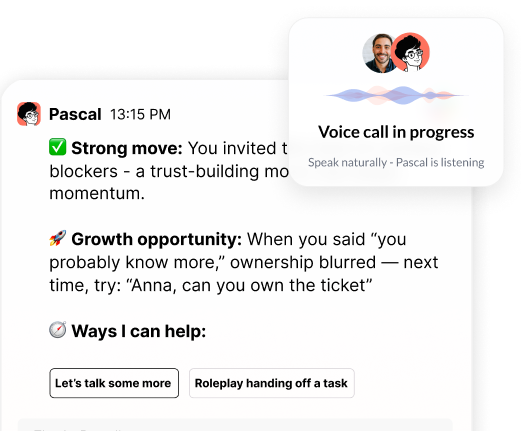
Curious to see how AI Coaching can 10X the impact and scale of your development initiatives. Book a demo today for: