
Blog article
Should you redesign the technical hiring process to allow AI use?
Chinese firms are nearly 2x more likely to allow AI in live interviews. What U.S. companies can learn from how they redesigned the process.


In the rush to capture AI efficiency, companies often automate tasks, eliminate roles, and pocket the projected savings. Six months later, some of those requisitions are open again, at a higher salary. In Robert Half's April 2026 survey, nearly a third of hiring managers who cut a role because of AI later rehired for it. Other companies are thriving with leaner teams, so for HR leaders building 2027 plans, the useful question is which roles fall into which group, and how to tell before deciding.
Some roles shrink cleanly with AI, and others lose more than they save when cut. The difference usually comes down to sequence. The rushed version runs automate, eliminate, pocket the savings. The version that holds up runs assess, redesign, then decide: map the tasks and skills in each role, rebuild the work around AI, and only then set headcount, reducing it where the work no longer needs people and redeploying people where it still depends on judgment and context.
Three data points from this year tell a consistent story:
When the rushed sequence goes wrong, it shows up fast. The companies in these surveys found out within two quarters that the work still needed people, and they bought it back at market rates.
The rehire bill is the visible cost. The larger costs are harder to put in a spreadsheet, and Gartner names them directly: "cuts deplete talent pipelines and erode institutional knowledge." The person who knew why the pricing exception exists, which client needs a call before an email, and how the old system breaks leaves with the role. A rehire arrives with skills and without that context, and the team spends months rebuilding it.
Pocketing the savings carries an opportunity cost as well. Gartner also predicts that by 2027, 75% of organizations that treat AI productivity gains as cost savings will be eclipsed by competitors that reinvest those gains into innovation, modernization and upskilling. Hackett Group's 2026 benchmarks point the same way, showing up to a 75% performance advantage for organizations that redesign processes around AI over those that automate existing ones.
So what can you do?
1. Assess skills before you touch headcount. Map the work at the task level, then get a clear read on the skills your people have today and where the gaps sit. A role that looks automatable on an org chart often holds judgment, relationships and context that no task list captures.
2. Invest first in the people showing capability and appetite. Some employees are already experimenting with AI, taking on stretch work and asking for more. Put your upskilling budget behind them first, because they will carry the redesigned roles and pull their teams along.
3. Train at team scale. The scale of AI change turns upskilling from an individual development plan into a team and organizational shift. A handful of coached high-potentials will stall inside teams that still work the old way, so the training has to reach whole teams, in the flow of their real work.
4. Measure behavior change. Course completions and satisfaction scores tell you people showed up. Leaders need to see whether new skills appear in real meetings and decisions, team by team, so they can reinvest where it's working and intervene where it's stalling. That view tells you whether the redesign is paying off well before the next planning cycle.
The rushed plan measures success in roles removed. A stronger 2027 plan measures the capability you're building: how many managers can lead the redesigned work, and how fast that number grows. We believe that companies that plan around that number will spend 2027 compounding their AI gains, while others spend it reopening requisitions.



“Thank you for setting the great foundation for my promotion; now I have a plan!"

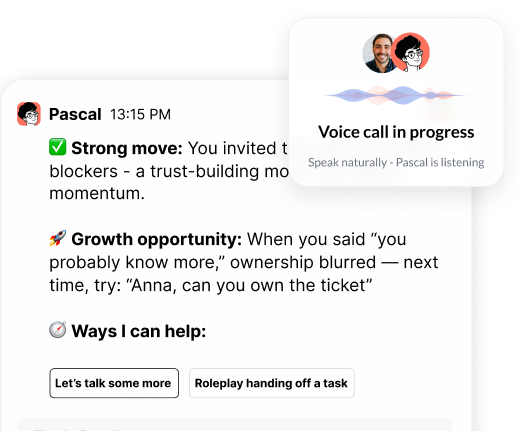
Curious to see how AI Coaching can 10X the impact and scale of your development initiatives. Book a demo today for: