
Purpose-built AI coaching platforms protect sensitive workplace conversations through user-level data isolation, encryption, zero customer-data training policies, and automatic escalation for sensitive topics. These aren't optional features; they're foundational requirements that enable trust, drive adoption, and protect organizations from legal exposure.
Quick Takeaway: Effective AI coaching depends on architectural security choices—data isolation, encryption, escalation protocols, and governance frameworks—that separate purpose-built platforms from generic tools repurposed for workplace use. Organizations must evaluate vendors on technical protections, regulatory compliance, and transparent data practices before deployment.
The tension between personalization and privacy defines AI coaching in 2025. CHROs want coaching that feels custom rather than templated. Employees want support that understands their challenges without surveillance. The answer isn't maximizing data access. It's being intentional about which data actually improves coaching quality, and how to protect it with enterprise-grade safeguards.
Privacy-first architecture stores data at the user level to prevent cross-account leakage, never trains on customer data, encrypts everything in transit and at rest, escalates sensitive topics to humans, and gives employees transparent control over their information. User-level data isolation makes it technically impossible for one employee's conversation to expose another's information. Clear escalation protocols for medical issues, terminations, harassment, and grievances ensure appropriate human involvement. Organizations can customize which topics trigger escalation based on specific risk tolerance and policies. Employees can view and edit what the AI knows about them through transparent settings. This transparency builds trust that generic AI tools cannot match; when managers understand their conversations remain confidential and their data won't train external models, they engage authentically with coaching.
Pinnacle completed its SOC 2 examination, validating controls for security, availability, and confidentiality, demonstrating that third-party validation backs architectural commitments. The examination evaluated controls based on trust service criteria ensuring systems are protected against unauthorized access, remain reliably available, and safeguard confidential information.
Purpose-built platforms recognize when conversations touch legal or ethical minefields—medical issues, terminations, harassment—and escalate to HR while helping managers prepare for those conversations appropriately. This dual approach protects the organization while maintaining the coaching relationship rather than creating fear or abandonment. Moderation systems automatically detect toxic behavior, harassment language, and mental health indicators. Sensitive topic escalation identifies medical issues, employee grievances, terminations, and discrimination concerns.
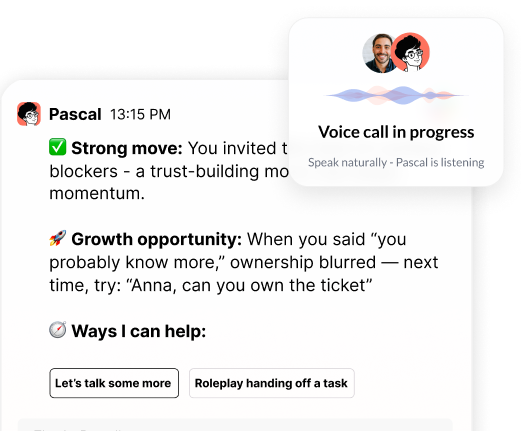
Pascal escalates conversations about sensitive employee topics to HR while helping users prepare for those conversations. Escalation maintains psychological safety by positioning it as supportive guidance rather than punishment. Aggregated, anonymized insights surface to HR teams to identify emerging patterns without exposing individual conversations. This approach differs fundamentally from generic AI tools that treat all queries equally and may provide legally risky advice on terminations, harassment, or performance management.
GDPR, the EU AI Act (mandatory August 2, 2025), CCPA, and emerging regulations require transparent data practices, risk assessments, and governance structures; organizations must verify vendors commit in writing to data minimization, secure handling, and explicit user consent. The EU AI Act requires transparency documentation, risk assessment, and governance for high-risk AI systems. CISA's 2025 guidance emphasizes data-centric controls across the AI lifecycle, including supply-chain vetting and monitoring for data drift. The International Coaching Federation's 2025 framework establishes security on the CIA triad: confidentiality (preventing unauthorized access), integrity (protecting data from tampering), and availability (ensuring reliable service).
Clear policies defining what data AI coaches can access and who owns escalation decisions prevent legal exposure. Regular audits of vendor data pipelines detect poisoning or model drift affecting coaching quality. For AI coaching specifically, this means documented risk assessments covering how systems handle sensitive coaching content, clear user-facing policies explaining data collection and retention practices, and governance structures overseeing vendor selection and incident response before deployment.
Secure AI coaching platforms never train models on customer data, isolate user information at the individual level, maintain SOC2 compliance with regular penetration testing, and provide transparent controls over data access. User-level data storage makes cross-account access technically impossible. Encryption with the highest protection standards across cloud providers ensures confidentiality. Clear data minimization policies ensure only necessary information is collected. Written vendor commitments to never use customer data for training external AI models protect your organization from unexpected exposure.
SOC2 examination validates controls for security, availability, and confidentiality, providing third-party assurance beyond vendor claims. Organizations should require vendors to customize guardrails to match their specific risk profile and organizational policies. Export capabilities and deletion guarantees if the contract terminates give you control over your data lifecycle.
| Evaluation Criterion | What to Ask | Red Flags |
|---|---|---|
| Data Isolation | Is data stored at user level? Can cross-account access happen? | Shared data structures, unclear isolation model |
| Training Data | Is customer data used for model training? In writing? | Vague answers, no written commitment |
| Encryption | What standards? In transit and at rest? | No encryption detail, consumer-grade standards |
| Escalation | How does it handle harassment, medical issues, terminations? | No escalation protocols, treats all topics equally |
| Compliance | SOC2? GDPR? CCPA? Current certifications? | No third-party audit, vague compliance claims |
Move beyond vendor assurances to scenario-based testing, contractual verification, and third-party audit reports; ask specific questions about encryption, data isolation, training policies, and escalation protocols. Request SOC2 or equivalent security audit reports. Ask vendors how they handle specific sensitive scenarios during demos—for example, a manager describing potential harassment. Verify data is stored at user level with encryption following NIST standards. Confirm in writing that customer data never trains AI models. Test escalation protocols with realistic scenarios. Review customer references specifically on security, privacy, and escalation effectiveness.
Examine whether the platform provides transparency into security architecture, not just compliance checkboxes. Evaluate whether employees can view and control what data informs their coaching. The most credible vendors explain their architecture clearly and welcome technical scrutiny rather than hiding behind certification badges.
CHROs must establish governance frameworks before deployment, define risk tolerance, work with Legal and IT to set escalation thresholds, and ensure cross-functional alignment on sensitive topic handling—this proactive governance prevents problems rather than managing crises. Create clear policies on what data AI coaches can access and use. Define escalation triggers and ownership for different categories: performance issues, harassment, mental health, terminations. Establish cross-functional governance teams including HR, IT, and Legal before deployment. Measure escalation effectiveness through engagement metrics and business outcomes. Champion the strategic value of human expertise alongside AI capabilities.
Pascal is built with enterprise-grade security at its foundation: user-level data isolation, SOC2 compliance, zero customer data training, and sophisticated guardrails that escalate sensitive topics to your HR team while maintaining confidentiality. The organizations getting this right recognize that security governance is a strategic priority, not an afterthought. When employees trust that their coaching conversations remain confidential and their data won't be exploited, they engage authentically. That authenticity drives the behavior change that proves ROI.
"By automating routine follow-ups and analysis, AI frees human coaches to focus on empathy, intuition, and strategic reflection. The key is building systems where AI handles what it does well and humans handle what requires judgment."
Selecting an AI coaching vendor requires looking beyond feature lists to understand what actually drives both effectiveness and organizational protection. Book a demo to see how Pascal's user-level data isolation, SOC2 compliance, customizable escalation protocols, and transparent security architecture protect your organization while delivering measurable manager effectiveness improvements.

.png)
.webp)
“Thank you for setting the great foundation for my promotion; now I have a plan!"

Curious to see how AI Coaching can 10X the impact and scale of your development initiatives. Book a demo today for: