
Organizations must build psychological safety for experimentation, redefine manager roles from doers to orchestrators, and embed continuous learning into daily workflows before deploying AI management tools. Cultural readiness determines whether AI adoption accelerates performance or stalls in resistance.
Cultural readiness predicts AI adoption success more accurately than feature sets or vendor capabilities. MIT research shows 95% of data science projects fail to deliver expected results due to factors including organizational resistance, poor data quality, and unclear business objectives. The sequence matters: culture → pilot → scale, not technology → resistance → abandonment.
Trust precedes adoption. Employees need to understand how AI connects to business goals and personal benefits before engaging with tools. HubSpot achieved 98% employee AI tool usage and 84% comfort levels by establishing cultural norms before rolling out AI capabilities. The company created psychological safety through transparent communication, voluntary adoption, and visible leadership modeling.
A culture ready for AI management demonstrates three characteristics: psychological safety for experimentation, clarity about human-AI role boundaries, and rituals that normalize continuous learning.
Psychological safety indicators include managers openly discussing AI experiments in team meetings, leaders modeling AI tool usage publicly, and employees asking "how might AI help here?" without fear of job displacement. Role clarity requires defining which decisions remain human-only (terminations, promotions, sensitive employee issues), which become AI-assisted (performance feedback drafting, meeting preparation, skill gap identification), and which AI can automate (scheduling, data aggregation, routine follow-ups). Without this framework, managers either over-rely on AI for judgment calls or reject it for routine tasks.
Learning integration means replacing quarterly training events with daily micro-learning moments embedded in Slack, Teams, or email. AI-ready culture treats every interaction as a learning opportunity.
Data Breakdown:
• Dimension: Feedback frequency | Traditional Management Culture: Annual reviews, quarterly check-ins | AI-Ready Management Culture: Real-time, contextual nudges
• Dimension: Learning modality | Traditional Management Culture: Scheduled training events | AI-Ready Management Culture: Continuous, embedded micro-learning
• Dimension: Decision authority | Traditional Management Culture: Manager owns all decisions | AI-Ready Management Culture: Clear human-AI boundaries
• Dimension: Performance measurement | Traditional Management Culture: Outcome-based reviews | AI-Ready Management Culture: Behavioral change tracking
Managers must transition from player-coaches who deliver results and develop people to orchestrators who coordinate hybrid human-AI teams. This shift requires rewriting job descriptions, competency models, and performance expectations before introducing AI tools.
The orchestrator role shifts time allocation. Managers spend less time on routine decisions (AI handles scheduling conflicts, drafts performance feedback, identifies skill gaps) and more time on judgment calls: career development conversations, conflict resolution, strategic prioritization. Melinda Wolfe, former CHRO at Bloomberg, Pearson, and GLG, captures the challenge: "We're asking more of managers with fewer resources." AI doesn't reduce manager workload—it shifts it toward higher-value activities.
New competencies required include:
• AI literacy: Understanding what AI can and cannot do
• Prompt engineering: Asking AI the right questions to get useful responses
• Human-AI collaboration: Knowing when to override AI recommendations
• Ethical judgment: Recognizing bias or inappropriate AI suggestions
These aren't technical skills. They're leadership capabilities that determine whether managers leverage AI or ignore it.
Organizations should follow a sequenced approach: establish leadership alignment, define AI governance, pilot with volunteers, measure behavioral change, scale based on satisfaction thresholds, and integrate into performance systems.
Secure Executive Sponsorship and Articulate the "Why"
CHROs must frame AI adoption as business imperative, not HR experiment. Connect AI management to outcomes: faster manager development, consistent leadership quality across locations, reduced HR business partner workload.
Establish Transparent AI Governance
Define what data AI can access (meeting transcripts, calendar, performance history) and what remains off-limits (health information, union discussions, legal matters). Document escalation pathways for sensitive topics AI shouldn't handle. Look for tools with SOC2 compliance, moderation flags for inappropriate content, and sensitive topic escalation. The hidden risks of unrestricted AI coaching in the workplace outlines what happens without these guardrails.
Pilot with Volunteer Managers, Not Mandates
Identify 10–20 managers across functions who are AI-curious (not AI-expert). Provide a 2–4 week pilot with clear success metrics: manager satisfaction, direct report feedback, time saved, quality of decisions. HubSpot's approach—employees demo AI use cases in 60-second sessions—creates collective learning.
Measure Behavioral Change, Not Just Usage
Track observable improvements: feedback quality, meeting effectiveness, delegation patterns, career development conversations. Use direct report surveys to validate manager development. Avoid vanity metrics like "number of AI interactions." Focus on outcomes.
Scale Based on Satisfaction Thresholds
Victor Arguelles from Marriott sets clear adoption gates: "We only scale once employee satisfaction reaches defined thresholds." This prevents forced adoption that breeds resentment. Zapier's approach—making AI tools available but not mandatory—allows organic adoption driven by peer demonstration.
Integrate AI Coaching into Performance Systems
Connect AI coaching insights to competency models, performance reviews, and development plans. This signals that AI-assisted development is valued, not separate from performance management.
Psychological safety for AI experimentation requires visible leadership modeling, permission to fail, and transparent communication about AI's role. Leaders must use AI tools publicly, share both successes and failures, and state that experimentation is expected.
HubSpot's leadership team demonstrated AI tool usage in company meetings, shared their learning process (including mistakes), and created dedicated Slack channels for AI experimentation. This top-down modeling gave managers permission to try, fail, and iterate.
Permission to fail means celebrating learning, not just results. When managers share "I tried using AI to draft performance feedback and it missed the mark—here's what I learned," they normalize the experimentation process. Organizations that punish AI missteps create cultures where managers avoid AI to minimize risk.
Transparent communication addresses job displacement fears. Task-based workforce planning helps employees see which tasks AI will handle (freeing them for higher-value work) versus which require human capabilities. This clarity reduces anxiety and increases willingness to experiment.
HR must shift from policy enforcer to product organization, designing AI-enabled management as an experience, not a mandate. HR teams should start acting like product organizations: HR leaders become product managers, treating managers as customers and AI coaching as a product requiring continuous iteration based on user feedback.
This means running pilots like product launches: define success metrics, gather user feedback, iterate, and scale only when satisfaction thresholds are met. Traditional HR approaches—enterprise-wide rollouts with change management plans—fail because they ignore user experience.
HR also becomes the bridge between technology vendors and organizational culture. AI coaching tools should integrate organizational competency models, leadership frameworks, and cultural values. HR's role is ensuring AI coaching reflects "how we lead here," not generic best practices.
Cultural readiness manifests in observable behaviors, not survey scores. Look for managers openly discussing AI experiments in team meetings, employees asking "how might AI help?" without prompting, and leaders modeling AI tool usage publicly. These behaviors indicate psychological safety and curiosity.
Quantitative indicators include pilot participation rates (are managers volunteering?), sustained usage after initial rollout (are they coming back?), and direct report feedback (are teams seeing improvement?). Organizations with strong cultural readiness see 80%+ pilot participation and 70%+ sustained usage at 90 days.
Qualitative signals matter equally. Listen for language shifts: from "AI will replace us" to "AI helps me focus on what matters," from "I don't have time to learn this" to "I can't imagine working without this." These narrative changes indicate cultural transformation is taking root.
• Culture predicts AI success more than technology: Prioritize psychological safety and role clarity before vendor selection
• Redefine manager roles before deployment: Transition from player-coach to orchestrator. Clarify which decisions remain human-only, which become AI-assisted, and which AI automates
• Follow a sequenced adoption path: Leadership alignment → governance → volunteer pilots → behavioral measurement → satisfaction-gated scaling → performance system integration
• Measure behavioral change, not usage: Track improvements in feedback quality, meeting effectiveness, and direct report engagement
• HR must become a product organization: Treat AI-enabled management as an experience requiring continuous iteration based on user feedback
Ready to see how AI coaching transforms manager effectiveness? See how Pascal works inside Slack to deliver real-time, contextual guidance aligned with your leadership frameworks.
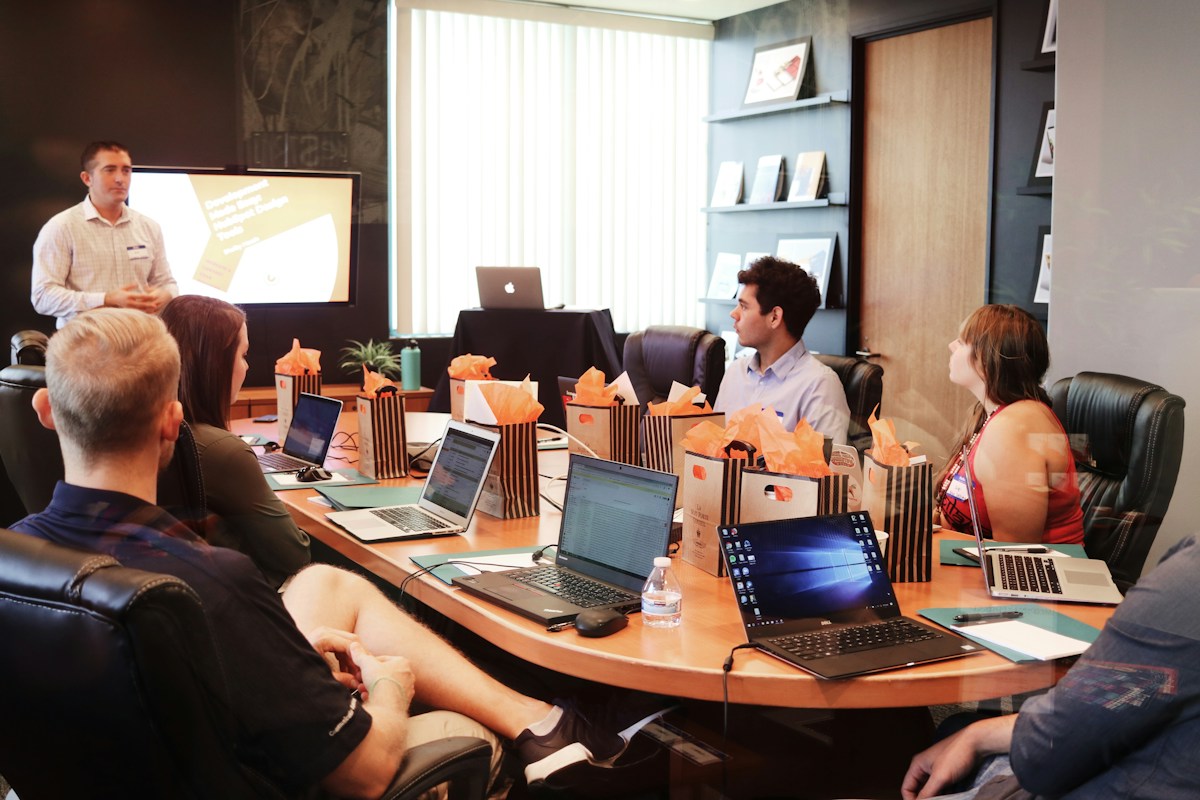
Header photo by Campaign Creators on Unsplash

.png)
.webp)
“Thank you for setting the great foundation for my promotion; now I have a plan!"


Curious to see how AI Coaching can 10X the impact and scale of your development initiatives. Book a demo today for: