

Managers addressing poor performance need support at each step: diagnosing the cause, setting clear expectations, holding the accountability conversation, documenting progress, and knowing when to involve HR. Pinnacle built Pascal, an AI coach, to support managers through that sequence. This post walks through each step and describes how a coach can help along the way.
A performance gap can come from unclear expectations, missing skills, workload or something personal, and each cause calls for a different response. Starting with diagnosis gives a manager the right question to ask first, and it keeps the next steps matched to the real cause.
A manager who has diagnosed the cause can speak to it directly in the conversation that follows. That makes the discussion more useful for the employee as well, because the conversation addresses the actual reason for the gap.
After diagnosis, the manager agrees on specific, time-bound expectations with the employee and checks in on them regularly. Clear expectations give both people the same picture of what good looks like, and regular check-ins keep progress visible. Each check-in also gives the manager a natural point to document what has changed. Expectations that name a date and a measure are easy to review together, and they let the employee know exactly when the next conversation will happen.
Documentation turns a series of conversations into a clear record of what was agreed and what changed. A manager who notes each check-in has specifics ready for the next discussion and for any later conversation with HR. Regular documentation also helps the employee see progress, because each step is written down.
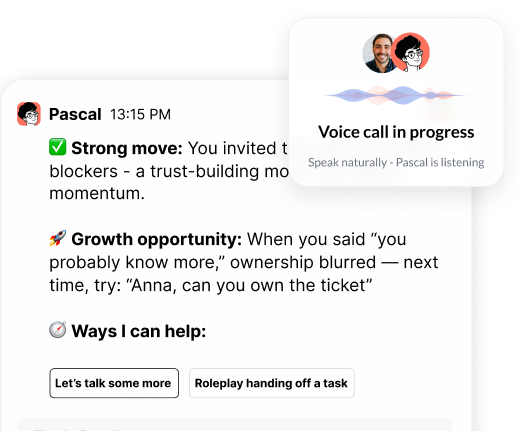
Pascal is an AI coach for every manager: a leadership companion who accompanies them in their meetings and work, and coaches from what actually happened.
Because he has accompanied the manager in meetings with the employee, he can help a manager see patterns across recent conversations and prepare talking points for the accountability conversation. That preparation helps a manager arrive with specifics from recent meetings.
Each person's coaching conversations with Pascal stay private. HR and executives see aggregated, anonymized insights, and only for groups large enough to protect anonymity.
When termination comes up, Pascal directs the manager to HR or the EAP and helps the manager plan the next conversation. Knowing when to involve HR is one of the five steps above, and a coach that points the manager to the right people at the right time supports that step directly.
Performance reviews and improvement plans are part of the same sequence. Pascal helps with each of them in the ways listed here.
A manager can treat the sequence as a checklist: diagnose the cause, agree on expectations, hold the accountability conversation, document progress, and involve HR when the situation calls for it. A coach that supports each of those moments helps the manager stay consistent from the first conversation through the review. Consistency matters because the employee sees the same approach at every step, and HR sees a clear record when the manager involves them.



“Thank you for setting the great foundation for my promotion; now I have a plan!"

Curious to see how AI Coaching can 10X the impact and scale of your development initiatives. Book a demo today for: