

The right questions during a vendor demo determine whether you'll deploy a tool managers use daily or one that gets abandoned. This guide walks through six evaluation areas, drawn from Pinnacle's experience building AI coaching tools and working with organizations implementing them.
Ask vendors what coaching methodology grounds their platform. Look for specific frameworks (GROW model, SBI feedback structure, situational leadership). Ask who built the coaching logic: ICF-certified coaches, organizational psychologists, leadership development experts, or software engineers working from general training data.
Test the platform with a complex scenario: "My direct report is technically strong but struggles with cross-functional collaboration. Walk me through how your platform would coach me." Watch whether the AI asks clarifying questions, references behavioral frameworks, and provides specific next steps—or whether it delivers generic advice you could find anywhere.
Red flags: vendors who can't name their coaching methodology, platforms that treat coaching as enhanced Q&A, solutions that provide identical guidance regardless of context.
Ask how vendors customize the platform to reflect your leadership competencies and organizational values. What data sources does the platform integrate: HRIS, performance management systems, 360 feedback, engagement surveys? Request a demonstration of how coaching differs for a new manager versus a senior leader in your organization.
Test whether the platform can reference your specific frameworks: "We use the SBI feedback model. Can your coach guide managers through this structure?"
Integration requirements to evaluate:
• HRIS integration (employee data, reporting structures, tenure)
• Performance management systems (goals, reviews, development plans)
• Communication platforms (Slack, Teams)
• Calendar and meeting tools
Platforms that integrate organizational data provide personalized guidance. Platforms without this context deliver one-size-fits-all responses.
Ask whether the platform joins meetings and provides real-time feedback, or if managers need to manually request coaching. What triggers proactive coaching moments: meeting patterns, communication tone, team dynamics?
Request a walkthrough of the manager's daily experience: "Show me what happens after I finish a difficult 1-on-1 conversation." Test whether the platform identifies patterns: "If I've had three rushed 1-on-1s in a row, does your coach notice and intervene?"
Proactive capabilities to evaluate:
• Post-meeting feedback (automatically generated after 1-on-1s, team meetings, difficult conversations)
• Pattern recognition (identifying communication trends, relationship dynamics, skill gaps)
• Nudges and reminders (prompting managers to follow up on commitments, prepare for important conversations)
• Anticipatory coaching (surfacing guidance before challenging situations based on calendar context)
Reactive tools that wait for managers to remember to use them see low sustained adoption. Proactive coaching creates consistent habits.
Ask which communication platforms vendors integrate with: Slack, Microsoft Teams, Zoom, Google Meet. Can managers access coaching without leaving their workflow? Request a live demonstration in Slack or Teams: "Show me how a manager would ask for feedback coaching while preparing for a difficult conversation."
Test cross-platform continuity: "If I start a conversation in Slack and then join a Zoom meeting, does the coach maintain context?"
Ask about implementation timelines. How long until managers can start using the coach? What does the rollout process look like? Vendors promising instant deployment without customization will deliver generic experiences.
An AI coach embedded in tools managers already use becomes a daily habit. A coach living in a separate portal that managers need to remember to visit will be abandoned.
Ask vendors to demonstrate how their platform handles sensitive scenarios: discrimination complaints, mental health concerns, harassment allegations, performance improvement plans. What triggers escalation to human experts? How does the platform ensure compliance with employment law?
Request specifics on moderation systems. What content is flagged? How quickly are sensitive topics routed to appropriate resources? Can you customize escalation pathways based on your organization's policies?
Critical guardrails to verify:
• Automated detection of sensitive topics (harassment, discrimination, mental health)
• Clear escalation protocols to HR, legal, or EAP resources
• Compliance with employment law and data privacy regulations
• Customizable controls based on organizational policies
• Anonymous, aggregated insights that protect individual privacy
Test the platform's boundaries: "A manager asks how to document poor performance for an employee they suspect has a disability. What does your platform do?" Effective platforms will recognize the legal complexity and direct the manager to HR or legal resources rather than providing coaching.
Ask what reporting dashboards vendors provide. Can you track which managers are using the platform consistently? Which coaching topics generate the most engagement? How do you measure whether managers are applying what they learn?
Request examples of behavioral change indicators. Does the platform track improvements in feedback quality, 1-on-1 consistency, or communication patterns? Can you correlate coaching engagement with performance review outcomes or employee engagement scores?
Data layers to evaluate:
• Adoption metrics (active users, session frequency, feature utilization)
• Engagement depth (conversation length, topic diversity, follow-through on recommendations)
• Skill development (progress on specific competencies, practice session completion)
• Behavior change (observable improvements in management practices)
• Organizational insights (aggregated trends, skill gaps, cultural patterns)
Ensure vendors provide anonymized, aggregated data that protects individual privacy while giving you enterprise-level visibility into coaching effectiveness.
• Purpose-built coaching expertise matters more than AI model sophistication. Platforms trained by ICF-certified coaches and grounded in behavioral frameworks deliver guidance managers trust and apply.
• Contextual awareness determines relevance. AI coaches that integrate with your HRIS, performance systems, and communication platforms provide personalized guidance.
• Proactive engagement creates habits. Platforms that join meetings, surface insights automatically, and identify patterns see higher sustained usage than those requiring managers to remember to ask for help.
• Integration strategy predicts adoption rates. AI coaches embedded in Slack, Teams, and Zoom see higher sustained usage than standalone portals.
• Proper guardrails protect your organization and your people. Platforms must recognize sensitive topics, escalate appropriately to human experts, and maintain compliance with employment law.
Selecting an AI coaching vendor requires looking beyond polished demos to understand what drives measurable outcomes. The vendors worth your investment are those built on coaching expertise, contextual about your people, proactively engaged, integrated into daily work, and equipped with appropriate guardrails.
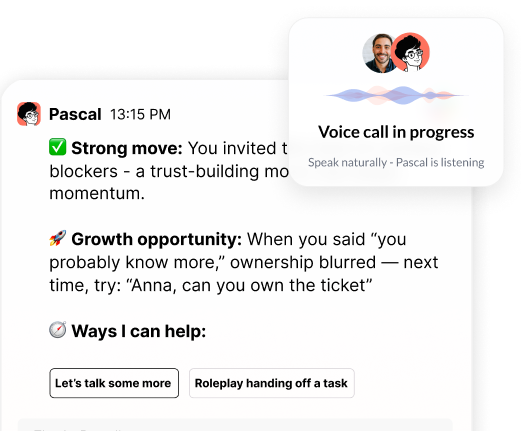
See how Pascal works inside Slack, Teams, and your meetings at heypinnacle.com.
Header photo by Christina @ wocintechchat.com M on Unsplash

.png)
.webp)
“Thank you for setting the great foundation for my promotion; now I have a plan!"

Curious to see how AI Coaching can 10X the impact and scale of your development initiatives. Book a demo today for: