
Organizations that extend coaching beyond executives to all managers see 30–40% faster time-to-competency for new managers, higher team engagement, and improved retention of high performers while spending a fraction of traditional executive coaching costs.
Executive coaching costs $5,000–$15,000 per person annually. This makes it economically impossible to extend beyond senior leadership. Yet the managers who need coaching most (first-time managers, mid-level leaders navigating hybrid teams, frontline supervisors making daily people decisions) receive little personalized development support.
This creates a critical gap. Gallup research shows manager effectiveness is the #1 predictor of employee retention. Yet 75% of managers are not rated highly effective at delivering coaching and feedback (Gartner, 2023). These managers directly influence the daily experience of 80% of your workforce.
Traditional coaching economics limit access to 1–3% of the workforce. Mid-level and frontline managers handle 80%+ of daily people decisions without coaching support. Organizations spend heavily on workshops and LMS platforms with engagement rates below 20%, yet the manager problem persists.
When managers lack support for difficult conversations, team conflicts, and career development discussions, the costs ripple through the organization: broken trust, bad decisions, legal exposure, and disengaged teams.
Democratizing coaching means extending personalized, contextual leadership guidance to 200–2,000+ managers at $250–$750 per person annually through AI-powered platforms. These platforms maintain professional coaching quality (many are trained by ICF-certified coaches) while achieving scale impossible with human-only models.
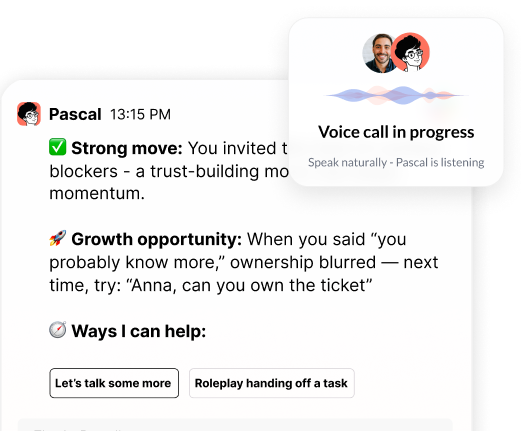
Here's what this looks like day-to-day: A manager preparing for a difficult performance conversation opens Slack and asks their AI coach how to structure the discussion. The AI provides a framework, suggests specific language, and offers to role-play the conversation. During the actual 1:1, the manager feels prepared. Afterward, the AI follows up with reflection questions to reinforce learning.
Or: An AI coach joins a team meeting (with consent), observes dynamics, and sends the manager private feedback afterward: "You interrupted Sarah twice when she raised concerns about the timeline. Consider asking follow-up questions instead of immediately problem-solving."
This is in-the-flow guidance. The coaching happens at the exact moment decisions are made, not weeks later in a workshop.
Organizations implementing this model report measurable improvements within 90 days. We've seen 83% of direct reports observe positive behavioral changes in their managers. Manager NPS scores increase by 20%. HR teams save 150+ hours previously spent on routine guidance conversations.
The ROI comes from three sources. First, replacing expensive point solutions (traditional coaching programs, underutilized LMS platforms). Second, reducing HR business partner workload by handling routine queries. Third, improving manager effectiveness at the moments that shape employee experience: before difficult conversations, during team conflicts, when career development discussions happen.
Data Breakdown:
• Factor: Cost per person | Traditional Executive Coaching: $5,000–$15,000 annually | Democratized AI Coaching: $250–$750 annually
• Factor: Population reached | Traditional Executive Coaching: 1–3% (senior executives only) | Democratized AI Coaching: 100% of managers
• Factor: Availability | Traditional Executive Coaching: Scheduled sessions weeks apart | Democratized AI Coaching: 24/7, in-the-flow
• Factor: Time-to-impact | Traditional Executive Coaching: 6–12 months | Democratized AI Coaching: 90 days
• Factor: Measurability | Traditional Executive Coaching: 360 reviews, business outcomes | Democratized AI Coaching: Behavioral data, NPS scores, direct report surveys
AI coaching delivers faster ROI than traditional alternatives because it addresses the "last mile" problem: actual behavior change in real work contexts. Unlike LMS platforms with 15–20% engagement rates or annual workshops that employees forget within weeks, AI coaching meets managers in their daily workflow (Slack, Teams, Zoom). The coaching provides contextual guidance before a difficult 1:1, during team conflicts, when preparing performance conversations.
Traditional coaching costs $5,000–$15,000 per executive annually and reaches less than 3% of your workforce. AI coaching costs $250–$750 per person and reaches 100% of managers. The economic model shifts from "exclusive executive benefit" to "organizational capability."
AI coaching reduces HR business partner workload by handling routine guidance. This allows HR teams to cover broader scope without proportional headcount increases. When HRBPs can refer employees to AI coaching before discussions, conversations become deeper and more strategic. Shared coaching threads and AI role-play prepare both managers and employees, making human coaching more efficient.
Data Breakdown:
• Learning Modality: Traditional executive coaching | Cost: $5,000–$15,000/person | Reach: 1–3% workforce | Engagement Rate: High (scheduled) | Time-to-Impact: 6–12 months | Measurability: 360 reviews, outcomes
• Learning Modality: LMS platforms | Cost: High upfront + per-seat | Reach: 100% potential | Engagement Rate: 15–20% | Time-to-Impact: Minimal | Measurability: Completion rates only
• Learning Modality: Annual workshops | Cost: One-time cost | Reach: 100% potential | Engagement Rate: Low retention | Time-to-Impact: Minimal | Measurability: Attendance tracking
• Learning Modality: AI coaching | Cost: $250–$750/person | Reach: 100% managers | Engagement Rate: 80%+ active use | Time-to-Impact: 90 days | Measurability: Behavioral data, NPS, direct reports
Organizations extending coaching to all managers see three categories of measurable outcomes within 90 days: manager effectiveness improvements, operational efficiency gains, and team performance indicators.
Manager effectiveness: 83% of direct reports observe positive behavioral changes in their managers using AI coaching platforms. This isn't self-reported improvement. It's validated by the people who experience these managers daily.
Operational efficiency: HR teams save 150+ hours per quarter through reduced routine guidance requests. When AI coaching handles base-level queries and provides 24/7 support, HRBPs can focus on strategic initiatives.
Team performance: Manager NPS scores increase by 20% on average. New managers reach competency 30–40% faster. These improvements compound over time as managers build confidence and capability.
The business case strengthens when you calculate replacement costs. Losing a high-performer costs 1.5–2x their annual salary. The investment pays for itself when you prevent even 2–3 regrettable departures annually.
Start with high-impact populations where ROI appears fastest: new managers, first-line managers, and mid-level leaders. These groups benefit most from accessible coaching support as they develop leadership skills. Early wins with these populations build organizational momentum for broader rollout.
Integration with daily tools managers already use removes adoption friction. Coaching that lives in Slack, Teams, or meeting platforms means managers don't need to log into another system or remember to check a separate app. Coaching happens in the flow of work.
Proactive coaching drives higher adoption than on-demand tools. When AI coaches join meetings and provide real-time feedback, managers experience value immediately. They don't need to remember to ask for help. The coaching comes to them at moments when guidance matters most.
Show managers how AI coaching helps them prepare for difficult conversations, navigate team conflicts, and develop their people. Focus on real business outcomes, not feature lists.
Enterprise AI coaching requires robust privacy protections and governance frameworks. Organizations need platforms that are SOC2 compliant, never train on customer data, and provide clear controls over what information the AI can access.
The platform should provide aggregated, anonymized insights at the organizational level without compromising individual privacy. Leadership needs to understand engagement trends, common challenges people face, skills employees need to develop, and behavioral patterns across departments. This helps identify areas needing attention without exposing individual conversations.
Governance frameworks should specify who has access to what data, how insights are shared with leadership, when human escalation occurs, and how the organization monitors AI coaching quality. Clear policies build trust and ensure the platform delivers value while protecting employee privacy.
Look for platforms that maintain enterprise-grade security: SOC2 compliance, moderation flags for inappropriate content, sensitive topics escalation to human experts, organization-specific controls, and anonymous aggregated insights for leadership. Individual coaching conversations remain private while leadership receives anonymized trends.
• Democratizing coaching extends access from 1–3% of the workforce to 100% of managers at $250–$750 per person annually versus $5,000–$15,000 for traditional executive coaching
• Organizations see measurable ROI within 90 days: 83% direct report improvement rate, 20% manager NPS increase, 150+ hours saved in HR time per quarter
• AI coaching costs a fraction of traditional coaching while delivering higher engagement than LMS platforms (80%+ active use vs. 15–20%) and faster time-to-impact than workshops (90 days vs. 6–12 months)
• The business case strengthens when calculating replacement costs: preventing 2–3 regrettable departures (1.5–2x salary each) pays for annual program investment
• Purpose-built AI coaching platforms integrate with daily workflows (Slack, Teams, Zoom), provide proactive feedback in meetings, and maintain SOC2 compliance while never training on customer data
The gap between where coaching is needed most and where it's currently available costs organizations millions in turnover, disengagement, and lost productivity. Democratizing coaching isn't about replacing human coaches. It's about scaling what they do best to reach everyone who needs support.
See how we work inside Slack, Teams, and meetings to deliver real-time coaching. Learn more about Pinnacle.
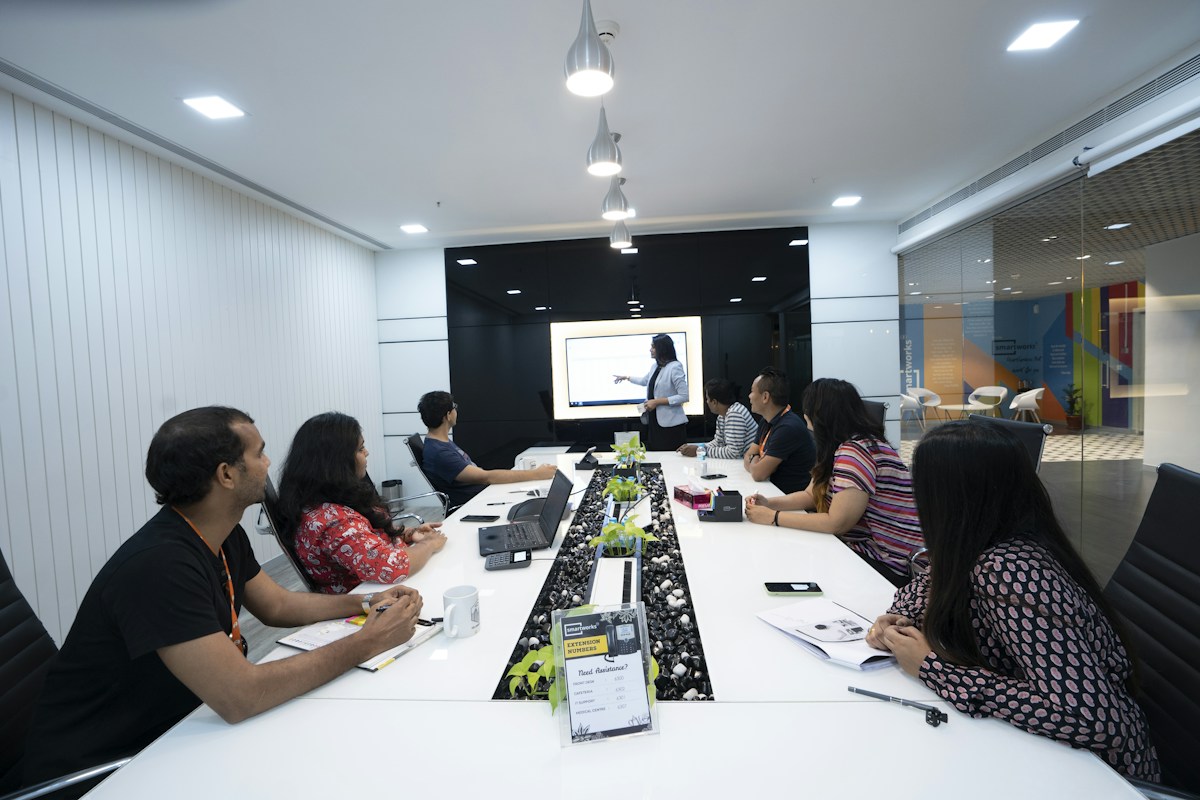
Header photo by Smartworks Coworking on Unsplash

.png)
.webp)
“Thank you for setting the great foundation for my promotion; now I have a plan!"

Curious to see how AI Coaching can 10X the impact and scale of your development initiatives. Book a demo today for: