
Purpose-built AI coaching platforms maintain 94% monthly retention with 2.3 coaching sessions per week and measurable manager improvement, while bundled HR system features see engagement drop to 10–20% within months due to generic guidance and adoption friction. The distinction determines whether managers receive personalized guidance grounded in their actual situations or generic advice that could apply anywhere.
Quick Takeaway: Purpose-built AI coaches are engineered specifically for coaching with proprietary frameworks grounded in behavioral science; bundled features integrate general-purpose AI into existing HR systems through standard APIs for convenience. The architectural distinction determines whether managers receive personalized guidance grounded in their actual situations or generic advice that could apply anywhere, directly predicting adoption rates and measurable improvements in manager effectiveness.
At Pinnacle, we've spent years building Pascal, our purpose-built AI coach, while working closely with CHROs evaluating different approaches. We've learned that the gap between an AI feature bolted into an HRIS and a coaching system designed specifically for behavior change is enormous. This distinction isn't academic. It directly impacts whether your investment scales manager effectiveness or becomes another underutilized tool gathering digital dust.
Purpose-built AI coaches are engineered specifically for coaching with proprietary frameworks grounded in people science; bundled AI features integrate general-purpose AI into existing HR systems through standard APIs for convenience. The architectural distinction determines whether managers receive personalized guidance grounded in their actual situations or generic advice that could apply anywhere.
Purpose-built systems draw from 50+ proven leadership frameworks and ICF-certified coaching principles. They maintain comprehensive organizational and individual context through HRIS integration, performance reviews, and meeting data. They proactively surface guidance; bundled features operate reactively, waiting for users to initiate. Purpose-built platforms achieve coaching that increases course completion rates by 57% and reduces time to completion by 60% because the guidance is contextually relevant rather than generic.
Bundled tools rely on general-purpose AI adapted for HR workflows, lacking specialized coaching methodology. They access only limited API data, requiring managers to repeatedly explain situations. The architectural limitation is fundamental: when you integrate a general-purpose AI into an HR system through standard APIs, you get convenience without depth. When you build a system specifically for coaching, you get depth that actually changes behavior.
Purpose-built platforms achieve 94% monthly retention with managers averaging 2.3 coaching sessions per week, while bundled AI tools see engagement decline to 10–20% within six months as managers realize guidance lacks organizational context and relevance.
The engagement patterns reveal the architectural difference clearly. Organizations deploying bundled tools see initial enthusiasm followed by predictable decline. Managers try the system, find the advice too generic to apply, and gradually stop engaging. Purpose-built platforms see the opposite: usage increases over time as contextual awareness improves and coaching becomes increasingly relevant to actual challenges.
Organizations report 83% of direct reports see measurable improvement in their managers using purpose-built coaching platforms. Proactive coaching drives 40% faster skill development than reactive bundled features because coaching arrives when context is fresh and motivation is high. Managers don't need to switch platforms or re-explain situations with purpose-built systems, eliminating friction that kills bundled adoption.
Purpose-built platforms deliver measurable behavior change through specialized coaching expertise and contextual awareness; bundled tools produce minimal sustained impact due to generic guidance and lack of escalation protocols for sensitive topics.
Highly engaged purpose-built users show a 20% lift in Manager Net Promoter Score. Purpose-built systems include moderation systems and escalation protocols for terminations, harassment, and medical issues. Bundled AI lacks guardrails, creating legal and compliance risks that make CHROs hesitant on adoption.
Purpose-built platforms enable organizational insights that weren't previously possible, helping HR allocate resources strategically. When patterns surface across all coaching interactions, HR teams can identify where managers struggle most and target interventions. Bundled tools operate in isolation, providing no visibility into organizational coaching patterns or skill gaps that might warrant targeted development programs.
| Factor | Bundled AI Features | Purpose-Built AI Coaches |
|---|---|---|
| Coaching expertise | General-purpose AI, no coaching training | Proprietary frameworks, behavioral science foundation |
| Contextual depth | Limited to available API data | Comprehensive individual and organizational context |
| Proactive engagement | Reactive only, user must initiate | Continuous coaching opportunities surfaced automatically |
| Monthly retention | Declines after initial launch | 94% sustained engagement |
| Sensitive topic handling | No guardrails or escalation | Sophisticated escalation protocols |
Purpose-built platforms justify investment for organizations focused on measurable manager effectiveness and sustained behavior change; bundled tools suit those prioritizing rapid deployment and workflow convenience for tactical questions.
Purpose-built solutions work when you need faster manager ramp time, improved feedback quality, and proven ROI. The investment in specialized coaching expertise pays dividends through sustained adoption and measurable behavior change. Bundled approaches fit when adoption friction is the primary barrier and you're supplementing existing coaching with general advice that managers can access without leaving their current systems.
Organizations embedding purpose-built AI throughout the employee lifecycle see adoption rates above 80%. The strongest business case combines both: coaching expertise grounded in people science, delivered seamlessly into existing workflows, with clear escalation to human experts for sensitive topics.
"If we can finally democratize coaching, make it specific, timely, and integrated into real workflows, we solve one of the most chronic issues in the modern workplace."
Combining purpose-built coaching expertise with embedded delivery into daily workflow tools scales adoption while maintaining behavioral science depth that neither approach achieves independently.
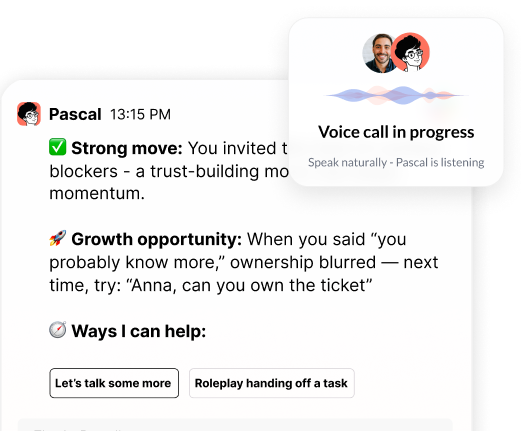
Purpose-built expertise ensures guidance is grounded in people science and customized to organizational culture. Embedded delivery eliminates adoption friction by meeting managers in existing tools. Pascal exemplifies the hybrid approach by embedding purpose-built coaching intelligence into Slack, Teams, and Zoom.
Managers access 50+ proven leadership frameworks and ICF-certified coaching principles without leaving their workflow. Contextual awareness from performance data, team dynamics, and organizational culture informs every interaction. Proactive coaching surfaces opportunities after meetings while embedding eliminates context-switching friction. Organizations see both sustained adoption (94% monthly retention) and measurable behavior change (83% of direct reports report improvement).
"Why settle for a subpar add-on when a purpose-built solution is already driving value?"
Ask vendors specific questions that reveal whether they've built genuine coaching platforms or repurposed general AI: Does your system have purpose-built coaching expertise or use general-purpose AI adapted for coaching? What organizational data does it integrate? Is coaching proactive or reactive? Where does coaching actually happen in workflows?
Vendors at different architectural levels serve different purposes; understanding where they sit prevents post-implementation disappointment. Request details on coaching frameworks, people science integration, and training data sources. Confirm whether coaching is proactive (system initiates) or reactive (user must ask). Verify that the platform lives in existing tools rather than requiring new tool adoption. Ensure escalation protocols exist for harassment, medical issues, and terminations.
Pascal combines purpose-built coaching intelligence with seamless embedding in Slack, Teams, and Zoom to deliver personalized guidance that managers actually trust and use consistently. Rather than generic advice that could apply anywhere, Pascal understands your team dynamics, your culture, and the specific moments when managers need support most. Organizations using Pascal see 83% of direct reports report measurable improvement in their managers, with 94% monthly retention and a 20% average lift in Manager Net Promoter Score.
Book a demo to experience how Pascal's hybrid architecture—purpose-built coaching expertise delivered where work already happens—transforms manager development across your organization and drives measurable improvements in leadership effectiveness.

.png)
.webp)
“Thank you for setting the great foundation for my promotion; now I have a plan!"

Curious to see how AI Coaching can 10X the impact and scale of your development initiatives. Book a demo today for: