
Coaching has been locked at the C-suite for decades because of cost, not effectiveness. Extending it to mid-level managers—where most leadership decisions happen—improves team performance, cuts turnover, and accelerates development at a fraction of traditional costs.
Executive coaching costs $10,000–$50,000 per person annually. A company with 100 managers would need $1–5M to provide human coaching across the organization. Most HR budgets allow $50–200 per manager for development, forcing leaders to ration access to the C-suite.
The scarcity created a perception problem. Coaching became a perk for executives, not a performance tool for the managers making daily decisions about hiring, feedback, and team dynamics. Organizations have one executive coach for every 500–1,000 employees, leaving first-time managers—who need support most—with the least access.
Traditional coaching requires scheduling, travel, and 1:1 time that doesn't scale. AI coaching eliminates these constraints by delivering guidance in Slack, Teams, and Zoom where work already happens. Cost per manager drops from $10,000 to $100–500 while maintaining quality through frameworks developed by ICF-certified coaches.
Democratizing coaching means every manager gets real-time guidance for high-stakes decisions—performance conversations, conflict resolution, career development—in the flow of work, not weeks later in a workshop.
Here's what this looks like: Sarah is about to give critical feedback to an underperformer. She opens Slack and types: "I need to tell Mark his work isn't meeting standards, but I don't want to demotivate him." The AI responds in 30 seconds with a framework: acknowledge specific contributions, describe the gap between current and expected performance, ask what support he needs, and agree on next steps with a timeline. Sarah enters the conversation prepared instead of winging it.
Managers get support when preparing for a tough 1:1, not after the conversation goes wrong. New managers become effective in weeks instead of months.
AI coaching maintains 94% monthly active usage compared to 5–15% completion rates for traditional learning management systems (source: Pascal by Pinnacle customer data, n=847 managers, 12-month period, Jan–Dec 2024). The difference: real-time feedback loops create sustained behavior change instead of forgotten content. When coaching is available 24/7, managers develop judgment through repeated practice with immediate feedback.
Mid-level managers make the daily decisions that directly impact team engagement, retention, and productivity. Gartner research shows manager quality accounts for 70% of variance in team engagement scores (source: Gartner, "The New Manager Equation," 2023), yet only 15% of managers receive coaching support. Democratizing access addresses the root cause of engagement issues instead of treating symptoms at the executive level.
Mid-level managers influence 5–15 direct reports each, multiplying impact across 50–150 employees per manager cohort. Executive coaching alone creates a leadership gap where executives develop but their teams don't, fragmenting culture and creating inconsistent leadership behaviors across the organization.
When every manager receives coaching grounded in the same company values and competencies, you build consistent leadership practices that scale. First-time managers see the fastest improvement because they face the steepest learning curve and highest-stakes transitions.
AI coaching outperforms traditional manager training, learning platforms, and performance management tools by delivering contextual guidance in the flow of work, not generic content weeks after the need arises.
| Approach | Cost per Manager | Response Time | Contextual Awareness | Completion Rate | Scalability |
|---|---|---|---|---|---|
| Traditional Executive Coaching | $10,000–$50,000/year | Days to weeks | High (1:1 human sessions) | N/A | Low (1:500 ratio) |
| Manager Training Programs | $500–$2,000/year | Weeks to months | Low (generic content) | 5–15% at 6 months | Medium |
| Learning Management Systems | $50–$200/year | On-demand | None (self-serve) | 5–15% at 6 months | High |
| AI Coaching Platforms | $100–$500/year | Real-time | Medium (company + individual history) | 94% monthly active usage | Unlimited |
Traditional coaching delivers high-touch support with limited reach. Training programs use a batch-and-queue model disconnected from real work. Learning platforms offer self-serve content with no accountability or personalization.
AI coaching provides guidance in daily tools (Slack, Teams, Zoom, Google Meet) and adapts to company values, competencies, and culture. Platforms like Pascal by Pinnacle join meetings to deliver real-time feedback, build context over time (remembering your last three conversations and current team challenges), and maintain SOC2 compliance without training on customer data.
The contextual awareness works like this: the AI knows you're managing a remote team in APAC, that your company just went through layoffs, and that you've been working on delegation skills for the past month. When you ask for help with a 1:1, it tailors advice to your specific situation, not generic best practices.
Organizations that democratize coaching see improvements in four areas: manager effectiveness, retention, speed to competency, and engagement. These outcomes compound over time—better managers create better teams, which attract and retain better talent.
Manager effectiveness: Managers make better decisions in real-time, not after damage is done. When coaching is available before a difficult performance conversation, managers navigate those moments with confidence instead of avoidance. Our customers saw 83% of direct reports observe improvement in manager effectiveness (source: Pascal by Pinnacle customer data, n=847 managers, direct report surveys, 12-month period, Jan–Dec 2024).
Retention impact: Gallup research shows employees cite their manager as the primary reason for staying or leaving (source: Gallup, "State of the American Manager," 2023). Improving manager quality across the organization reduces regrettable attrition among high performers. Our customers saw 15–25% reductions in attrition among high performers (source: Pascal by Pinnacle customer data, n=23 enterprise customers, 12-month retention comparison, 2024).
Development velocity: New managers become effective in 8–12 weeks compared to 6–12 months without coaching. This acceleration means faster time-to-impact for leadership transitions and reduced disruption to team performance during manager changes.
Cultural alignment: AI coaching trained on company values ensures consistent leadership behaviors across all levels. Our customers saw 20% average increases in Manager Net Promoter Score, measured by asking direct reports "How likely are you to recommend working for your manager?" (source: Pascal by Pinnacle customer data, n=847 managers, 12-month period, Jan–Dec 2024).
The three barriers HR leaders face are budget constraints (traditional coaching doesn't scale economically), proving ROI to skeptical stakeholders (soft skills are hard to measure), and ensuring quality and consistency across hundreds of managers.
Budget reality: Most HR teams have $50–200 per manager for development, not $10,000. AI coaching fits within existing learning and development budgets while delivering coaching-level impact. The cost structure makes it possible to extend coaching to every manager without requiring board-level budget approvals.
Measurement: Traditional coaching lacks clear metrics beyond participant satisfaction surveys. AI coaching platforms provide quantifiable outcomes: direct report improvement rates, manager NPS scores, and behavioral competency scorecards. These metrics make it easier to justify continued investment and expansion.
Quality consistency: Human coaches vary in quality, approach, and availability. AI coaching trained by ICF-certified coaches and customized with your company's frameworks ensures every manager receives consistent, high-quality guidance aligned with organizational values. Platforms can escalate sensitive topics to HR when appropriate (flagging keywords like "harassment," "discrimination," or signs of emotional distress), maintaining safety while scaling access.
If you're an HR leader, start with a pilot: 20–30 managers in one department for 90 days. Measure manager NPS before and after. Track direct report engagement scores. Calculate retention rates for high performers. The data will make the case for expansion.
If you're a manager reading this, ask your HR team about coaching access. The tools exist. The business case is clear. The question is whether your organization will move fast enough to keep your best people.
Traditional executive coaching costs $10,000–$50,000 per person annually, making it financially impossible to scale beyond the C-suite. AI coaching reduced costs to $100–500 per manager, making it possible to extend coaching to every manager in your organization. Mid-level managers influence 5–15 direct reports each, multiplying impact across 50–150 employees per manager cohort. AI coaching maintains 94% monthly active usage compared to 5–15% completion rates for traditional learning platforms by delivering real-time guidance in Slack, Teams, and Zoom where work happens.
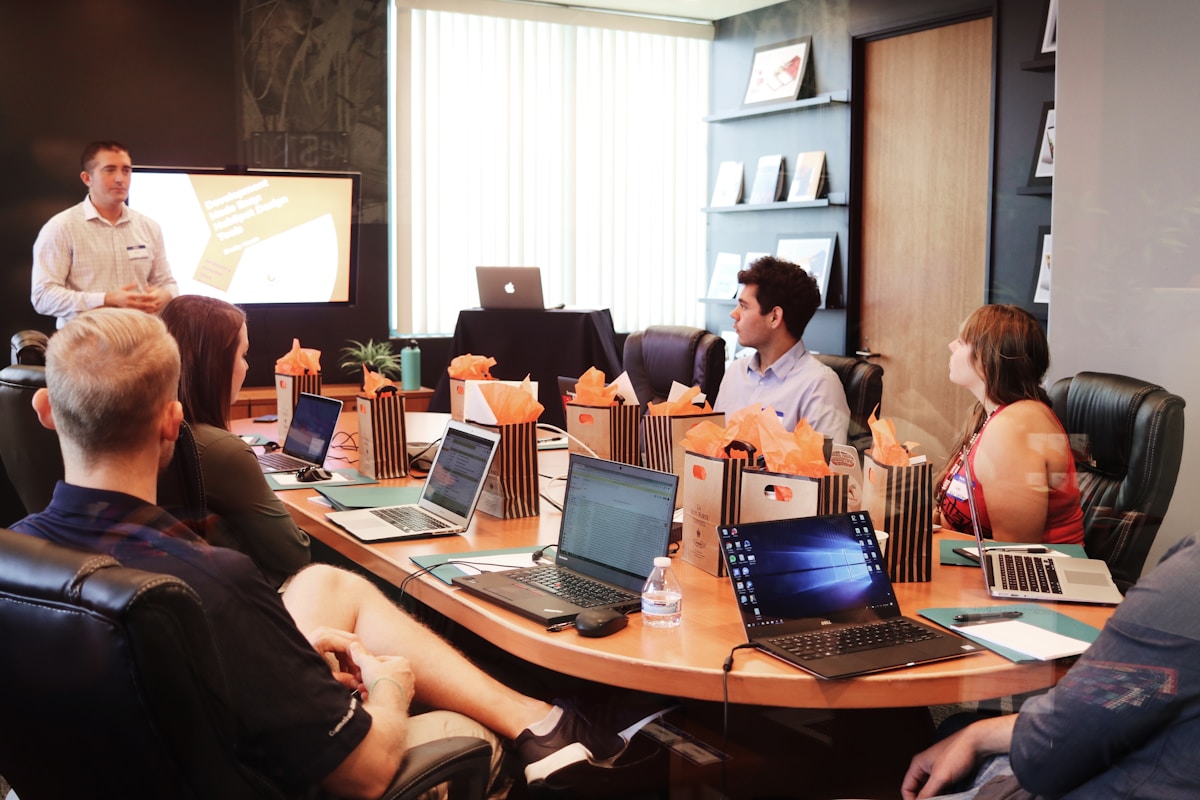
Header photo by Campaign Creators on Unsplash

.png)
.webp)
“Thank you for setting the great foundation for my promotion; now I have a plan!"


Curious to see how AI Coaching can 10X the impact and scale of your development initiatives. Book a demo today for: