

Managers struggle with difficult conversations not because they lack scripts, but because they lack confidence in adapting language to specific people and situations. The solution isn't choosing between scripts, training, or AI tools—it's understanding when each approach works and layering them strategically.
Most organizations provide script libraries for performance issues, accommodation requests, and terminations. Managers avoid these conversations because generic language feels inauthentic and they don't know how to adapt when the conversation goes off-script.
A performance conversation script might say: "I've noticed a pattern in your work that we need to discuss." But what happens when the employee gets defensive? Or starts crying? Or brings up a personal crisis? Scripts provide a starting point, not a roadmap for the entire conversation.
The gap isn't what to say—it's how to think through what to say based on who you're talking to and what you're trying to achieve.
Most organizations choose between static script libraries, manager training programs, or AI coaching tools. Each addresses different parts of the problem.
Static scripts provide pre-written dialogue for common scenarios. HR teams create repositories with sample language for 15-20 situations: performance warnings, accommodation discussions, termination conversations. These scripts provide legal protection and consistency but can't adapt to individual employees or unexpected responses.
Training programs teach frameworks through workshops, often including roleplay practice. Programs like Crucial Conversations or Radical Candor (Kim Scott's framework for giving direct feedback while showing you care) build understanding of communication principles. Managers leave workshops energized but struggle to apply concepts weeks later when facing real situations.
AI coaching tools deliver guidance in the flow of work, adapting frameworks to specific situations and people. These platforms provide support at the moment managers need it: before a difficult one-on-one, during a tense team meeting, while drafting a performance review.
Data Breakdown:
• Approach: Scripts | Best Use Cases: • Terminations and layoffs
• Discrimination or harassment complaints
• FMLA (Family and Medical Leave Act) and accommodation requests
• Any scenario where consistent language across all managers matters for compliance | Strengths: • Provides legal protection and precise language
• Ensures consistency across the organization
• Reduces risk in high-stakes conversations
• Quick reference for legally sensitive topics | Limitations: • Cannot adapt to individual employees
• Feels inauthentic and transactional
• Doesn't help when conversations go off-script
• Fails in nuanced situations requiring personalization
• Approach: Training | Best Use Cases: • Building understanding of frameworks
• Establishing shared language across the organization
• Introducing new managers to core concepts
• Creating cultural alignment on how difficult conversations should happen | Strengths: • Builds mental models and frameworks
• Creates shared organizational language
• Establishes cultural expectations
• Provides practice in safe environments | Limitations: • Happens in isolated sessions, often months before application
• Managers struggle to recall concepts under pressure
• Application gap between theory and practice
• Approach: AI Coaching Tools | Best Use Cases: • Performance feedback requiring personalization
• Career development conversations
• Conflict resolution between team members
• Any situation where the manager needs to adapt language to the specific person and context | Strengths: • Delivers frameworks at the moment of need
• Adapts guidance to specific people and situations
• Provides real-time practice and feedback | Limitations: • Requires purpose-built platforms, not generic chatbots
• Depends on quality of underlying frameworks
• Effectiveness varies based on platform sophistication
Scripts excel in legally sensitive scenarios requiring precise language: terminations, discrimination complaints, FMLA discussions. When legal risk is high and the conversation follows a predictable path, scripts protect both the manager and the organization.
Scripts fail in nuanced situations requiring personalization: performance feedback, career development, conflict resolution. Employees recognize when managers are reading from a template. The conversation feels transactional, not human.
Example: A script for addressing missed deadlines might say, "I've noticed you've missed three deadlines this month. This impacts the team's ability to deliver on time. What's going on?" This works if the employee responds with a straightforward explanation. But if they get defensive ("I've been working 60-hour weeks!") or deflect ("Other people miss deadlines too"), the script doesn't help the manager navigate the next turn in the conversation.
Training builds understanding. Frameworks like SBI (Situation-Behavior-Impact—a three-part structure for giving specific feedback) give managers a mental model for structuring feedback. Workshops create shared language across the organization and establish expectations for how managers should approach difficult conversations.
But training happens in isolated sessions, often months before managers face the situations where they need the skills. Managers who use structured frameworks report higher confidence in difficult conversations—but only when they can apply the framework to their specific situation, not just remember it in theory.
The workshop teaches SBI. Three months later, a manager needs to address an employee who interrupted a client three times in a meeting. The manager remembers "situation, behavior, impact" but struggles to craft the actual words that will land well with this specific employee, who tends to get defensive when receiving feedback.
Managers adapt scripts effectively by combining pre-written language with real-time coaching that personalizes the approach to the specific employee and situation. The key is using scripts as a foundation while having support to modify language based on the employee's communication style, the relationship context, and how the conversation unfolds.
Purpose-built AI coaching tools help managers take script frameworks and adapt them on the fly. For example, if a performance conversation script suggests opening with "I've noticed a pattern we need to discuss," the tool can help the manager adjust this language for an employee who responds better to direct data ("You've missed three of the last five deadlines") versus one who needs more context first ("I want to talk about how we can support you in meeting deadlines").
The most effective adaptation happens when managers can practice beforehand, getting feedback on their personalized approach, then reference guidance during the actual conversation if it goes off-script.
Training establishes the foundational frameworks and mental models that managers need to understand difficult conversations, while AI tools provide real-time support to apply those frameworks to specific situations. Training answers "what should I know?" and AI tools answer "how do I use this knowledge right now with this person?"
Training programs like Crucial Conversations or SBI feedback models create shared organizational language and build managers' conceptual understanding. These frameworks give managers the structure to think through difficult conversations systematically. However, training typically happens months before managers face the actual situations where they need to apply the concepts.
AI coaching tools bridge the gap between learning and application. They surface the frameworks managers learned in training at the exact moment they need them, adapted to the specific employee and situation. Instead of asking managers to remember workshop content from three months ago, AI tools deliver relevant guidance in real time—before a difficult one-on-one, while drafting feedback, or when a conversation takes an unexpected turn.
The most effective approach combines both: training builds the foundation, and AI tools support ongoing application in real situations with real people.
AI coaching tools deliver frameworks at the moment managers need them, adapted to the specific person and situation. Instead of asking managers to remember workshop content from months ago, these tools surface relevant guidance in real time.
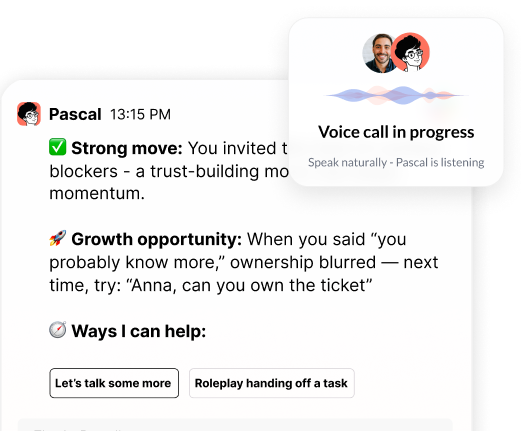
Here's what this looks like in practice: A manager preparing for a performance conversation opens the tool and inputs the situation ("Employee missed three deadlines, tends to get defensive"). The tool walks them through applying SBI to this specific scenario, suggesting language adapted to the employee's communication style. The manager can practice the dialogue beforehand, getting feedback on their approach. During the conversation, if they get stuck, they can quickly reference guidance tailored to the employee and the specific issue.
The difference between AI coaching tools and generic chatbots matters. Purpose-built coaching platforms (like Pascal, which Pinnacle uses with clients) apply structured frameworks rather than generating generic advice. They integrate organizational context—your company's values, competencies, and culture. Generic chatbots provide plausible-sounding responses disconnected from your specific situation.
Use scripts when legal precision matters and the conversation follows a predictable path. Use training to build understanding and establish shared language. Use AI coaching tools for ongoing application support in complex, nuanced situations.
The most effective organizations layer all three. Scripts provide legal protection. Training builds skills. AI coaching tools support ongoing application in real situations with real people.
Start with training to build the foundation. Add scripts for legally sensitive scenarios. Layer in AI coaching tools to help managers apply what they learned in training to the specific people and situations they face daily.
• Scripts work for legally sensitive scenarios requiring precise language but fail in complex conversations requiring personalized judgment
• Training builds understanding but managers struggle to apply concepts weeks later when facing real situations
• AI coaching tools deliver frameworks at the moment managers need them, adapted to specific people and situations
• The most effective approach layers all three: scripts for legal precision, training for understanding, AI coaching tools for ongoing application support
• Context determines effectiveness—managers need guidance based on their people, culture, and specific situation to build trust and drive behavior change

.png)
.webp)
“Thank you for setting the great foundation for my promotion; now I have a plan!"

Curious to see how AI Coaching can 10X the impact and scale of your development initiatives. Book a demo today for: