

Goal tracking, feedback and action plans work together when each one hands something to the next. The goal gives the plan its focus, the plan gives feedback something specific to point at, and feedback after real meetings gives the progress review real evidence. Take one piece away and a development plan gets written once and goes stale.
Each person picks the skills they want to build, and the company sets organization-wide skills alongside them. The individual chooses what to work on, so the goal feels like personal development, and the company's priority, such as a new set of leadership principles, comes up in every coaching conversation. A goal such as delegating more clearly is specific enough to show up in a plan and again in later feedback.
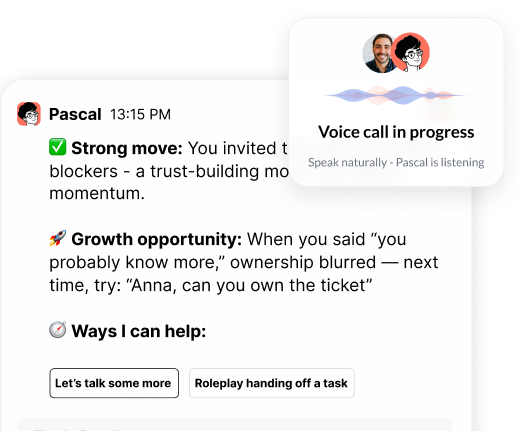
Pascal is an AI coach for every manager: a leadership companion who accompanies them in their meetings and work, and coaches from what actually happened. With Pinnacle, Pascal generates a development plan in one click from performance data and breaks the goal into focus areas and activities, so the manager knows what to practice in the coming weeks.
A plan on its own rarely changes behavior. Once it's written, nothing drives it day to day, and it goes stale. Pascal is built to be that driver: it coaches in the flow of the manager's actual work and keeps pushing progress against the plan week after week.
Pascal's feedback arrives in Slack or Teams, usually within a few minutes of a meeting. Managers who want a wider view can switch to daily roll-ups that track patterns across several meetings, or to weekly summaries of leadership patterns and growth areas. That feedback references both sets of skills, so the goal comes back up right after a real conversation.
Each person's coaching conversations with Pascal stay private. HR and executives see aggregated, anonymized insights, and only for groups large enough to protect anonymity.
A built-in multi-rater review closes that coaching loop. Peers, direct reports and the manager's own manager give input, or the company runs an upward feedback survey, and Pascal turns the results into a report on development areas and next steps. Over time, the review also tracks behavior change and progress toward goals. For gathering input between reviews, see how to ask your team for feedback.
Building a development plan is the easy part. Driving the behavior behind it is the hard part, so the weak spot is the handoff from the plan into daily work. When you compare tools, check that feedback after a real meeting names the goal from the plan, that the multi-rater review measures the same skills the feedback keeps raising, and that managers still come back to it after the launch month.



“Thank you for setting the great foundation for my promotion; now I have a plan!"

Curious to see how AI Coaching can 10X the impact and scale of your development initiatives. Book a demo today for: