
AI coaches learn company culture by ingesting organizational documents (values, competencies, policies), integrating with HR systems (roles, performance data, goals), and optionally observing workplace interactions (meetings, communications). The depth of this data collection determines whether the AI delivers generic advice or guidance that reflects how work actually happens in your organization.
An AI coach understands culture when it recognizes the unwritten rules governing how your people work—not just what your values deck says, but how those values show up in daily decisions and communication patterns.
Cultural understanding requires three layers. First, explicit culture: your documented values, competencies, and leadership frameworks. Second, observed culture: how people actually communicate, make decisions, and resolve conflicts. Third, individual context: each person's role, goals, and team dynamics.
Generic AI tools trained on internet data provide advice that sounds professional but doesn't reflect your organization's specific approach to management. A culturally-informed AI references your culture deck while recognizing that your engineering team communicates differently than your sales organization.
AI coaching platforms gather cultural data through document uploads, HR system integrations, and optional workplace observation. The breadth of this collection determines how well the AI delivers culturally-aligned coaching from day one.
Document ingestion forms the foundation. Organizations upload values statements, culture decks, leadership competency frameworks, career ladders, performance review templates, feedback guidelines, and training materials. This gives the AI explicit knowledge of what your organization says it values.
HR system integration adds individual context. The platform pulls role, level, function, and reporting structure from your HRIS. It incorporates performance review data, development goals, personality assessments (DISC, Myers-Briggs), and 360 feedback results.
Workplace observation reveals how culture actually operates. The AI can join meetings via calendar integration, monitor collaboration tools to understand communication norms, and provide real-time feedback on how managers handle specific situations.
Data Breakdown:
• Data Source: Organizational documents | What It Reveals: Explicit values, frameworks, policies | Implementation Complexity: Low (one-time upload) | Privacy Considerations: Minimal (public internal docs)
• Data Source: HRIS integration | What It Reveals: Role context, reporting structure | Implementation Complexity: Medium (API setup) | Privacy Considerations: Moderate (employee data access)
• Data Source: Performance data | What It Reveals: Individual goals, development areas | Implementation Complexity: Medium (system integration) | Privacy Considerations: High (sensitive performance info)
• Data Source: Meeting observation | What It Reveals: Real communication patterns | Implementation Complexity: High (calendar + video integration) | Privacy Considerations: High (requires explicit consent)
• Data Source: Workplace communications | What It Reveals: Collaboration norms, interaction styles | Implementation Complexity: High (Slack/Teams integration) | Privacy Considerations: Very high (ongoing monitoring)
Workplace observation—AI joining meetings, monitoring Slack channels, tracking interaction patterns—raises significant privacy and consent questions that organizations must address before implementation.
The case for observation: Real-time data reveals gaps between stated values and actual behavior. An AI that watches your meetings can identify patterns (you interrupt team members frequently, you don't ask for input before making decisions) that managers themselves don't notice. This mirrors how human coaches work: they observe behavior, then provide feedback based on what they witnessed.
The privacy concerns: Employees may feel surveilled rather than supported. "Explicit consent" in a workplace context isn't truly voluntary when opting out could signal lack of team commitment. Even if aggregate data is anonymized, individual managers receive feedback on their specific meetings—the data isn't anonymized for them. The AI builds relationship graphs and tracks who communicates with whom, creating a detailed map of workplace dynamics.
Questions to ask before enabling observation:
• Who gives consent—the manager, the entire team, or each individual participant?
• What happens if one person opts out? Can they opt out without career consequences?
• How is the data stored, who can access it, and for how long?
• Is the AI monitoring public channels only, or private messages too?
• What triggers escalation to human HR, and how quickly does it happen?
Organizations should start with document ingestion and HR integration, then add observation only after establishing clear policies on consent, data access, and escalation protocols. Some companies limit observation to managers who volunteer, creating a pilot group rather than company-wide surveillance.
Observational AI joins meetings, monitors communications, and tracks interaction patterns. It provides immediate post-meeting feedback and identifies patterns across multiple interactions. It eliminates the need for managers to explain context repeatedly.
Input-dependent AI requires managers to describe situations, provide background, and articulate questions. It functions like an advanced chatbot—helpful for specific queries but lacking situational awareness. Custom GPTs, generic copilots, and traditional coaching chatbots fall into this category.
The observational approach creates higher engagement because it removes friction. Busy managers don't have time to write detailed prompts. But this convenience comes with the privacy tradeoffs described above.
Jeff Diana, former CHRO at Calendly, Atlassian, and SuccessFactors, explains: "Real learning and value come from in-context coaching—solving problems in the moment, not in a classroom."
AI coaches excel at pattern recognition across hundreds of interactions and can reference organizational frameworks instantly. Human HR leaders bring intuitive judgment to complex cultural nuances. The most effective approach combines both.
Where AI coaches excel: They deliver consistent guidance to all 500 managers, not just the 20 who have HRBP relationships. They provide immediate feedback rather than waiting for quarterly check-ins. They detect patterns across thousands of interactions that humans couldn't spot manually. They're available 24/7 when managers need support.
Where human expertise remains essential: Reading subtext and political dynamics that don't show up in observable data. Handling sensitive situations (harassment, discrimination, mental health concerns). Making judgment calls that require understanding of organizational history and relationships. Navigating complex legal or compliance scenarios.
The best systems route sensitive topics to human HR professionals automatically while scaling routine coaching through AI.
The best AI coaching platforms allow department-level and regional customization. Engineering teams operate differently than sales organizations. Your Berlin office has different norms than your Austin headquarters.
Organizations can tag documents by department and function level. Your engineering competency framework differs from your customer success framework. Your feedback model for individual contributors differs from your model for people managers. The AI references the right framework for each person's context.
Regional differences matter too. Communication directness varies across cultures. Feedback approaches that work in New York might fail in Tokyo. Decision-making processes differ between hierarchical and consensus-driven cultures.
The challenge is balancing customization with consistency. You want coaching that reflects departmental nuances without creating siloed cultures that can't collaborate.
AI coaching platforms start delivering culturally-aligned guidance within days of implementation. The initial document ingestion and HR system integration create a baseline understanding immediately. Deeper cultural learning—understanding how your values show up in practice—happens over 4-8 weeks as the AI observes actual workplace interactions (if you enable observation).
Organizations that provide comprehensive documentation (values, competencies, frameworks, policies) during setup see faster results. Those that integrate performance data and personality assessments enable more personalized coaching from day one.
The learning continues indefinitely. Every interaction refines the AI's understanding. Every meeting it joins reveals new patterns. Every feedback conversation teaches it how your managers actually apply your frameworks.
Enterprise AI coaching platforms include multiple safeguards: human review of culturally-sensitive guidance, escalation protocols for topics requiring HR expertise, organization-specific content controls, and privacy protections.
Moderation and review systems flag potentially problematic guidance before it reaches managers. If the AI generates advice that contradicts your documented policies or values, the system catches it. Human reviewers from your HR team can audit coaching conversations to ensure alignment.
Escalation protocols route sensitive topics to human experts. Questions about accommodation issues, potential harassment, mental health concerns, or legal matters trigger automatic escalation to your HR team.
Organization-specific controls let you define boundaries. You can specify topics the AI should never address. You can require certain frameworks or terminology. You can block references to competitors or sensitive business information.
Privacy protections ensure cultural insights don't compromise individual privacy. The AI provides anonymized, aggregated data on trends ("30% of managers struggle with difficult conversations about performance") without identifying specific people.
Generic coaching for a manager struggling with a direct report missing deadlines:
"Schedule a one-on-one meeting to discuss the missed deadlines. Ask open-ended questions about what's blocking their progress. Work together to create an action plan with clear milestones and check-in points."
Culturally-aligned coaching for the same situation at a company that values "Radical Candor":
"Your culture deck emphasizes caring personally while challenging directly. In your next one-on-one, start by acknowledging what this person does well (caring personally), then address the missed deadlines specifically (challenging directly). Reference your team's shared commitment to 'Disagree and Commit'—you need to understand their perspective, but ultimately they need to commit to the timeline. Based on your last performance review cycle, you tend to avoid difficult conversations until they escalate. Practice the opening: 'I've noticed you've missed the last three sprint deadlines. Help me understand what's happening.'"
The second version references specific cultural frameworks, connects to the manager's individual development area, and provides language that fits how this organization actually talks about feedback.
• AI coaches learn culture by ingesting organizational documents, integrating with HR systems, and optionally observing workplace interactions
• Workplace observation (AI joining meetings, monitoring communications) reveals how culture operates in practice but raises significant privacy and consent concerns that organizations must address before implementation
• AI coaching platforms deliver culturally-aligned guidance within days, with deeper understanding developing over 4-8 weeks
• The best systems balance AI's scalability and consistency with human expertise for sensitive situations through automatic escalation protocols
• Safeguards (moderation systems, escalation protocols, content controls, privacy protections) ensure AI coaches represent your culture accurately without compromising individual privacy
Ready to explore AI coaching for your organization? Learn how Pascal works inside Slack and Teams to deliver coaching that reflects your company's values and communication norms.
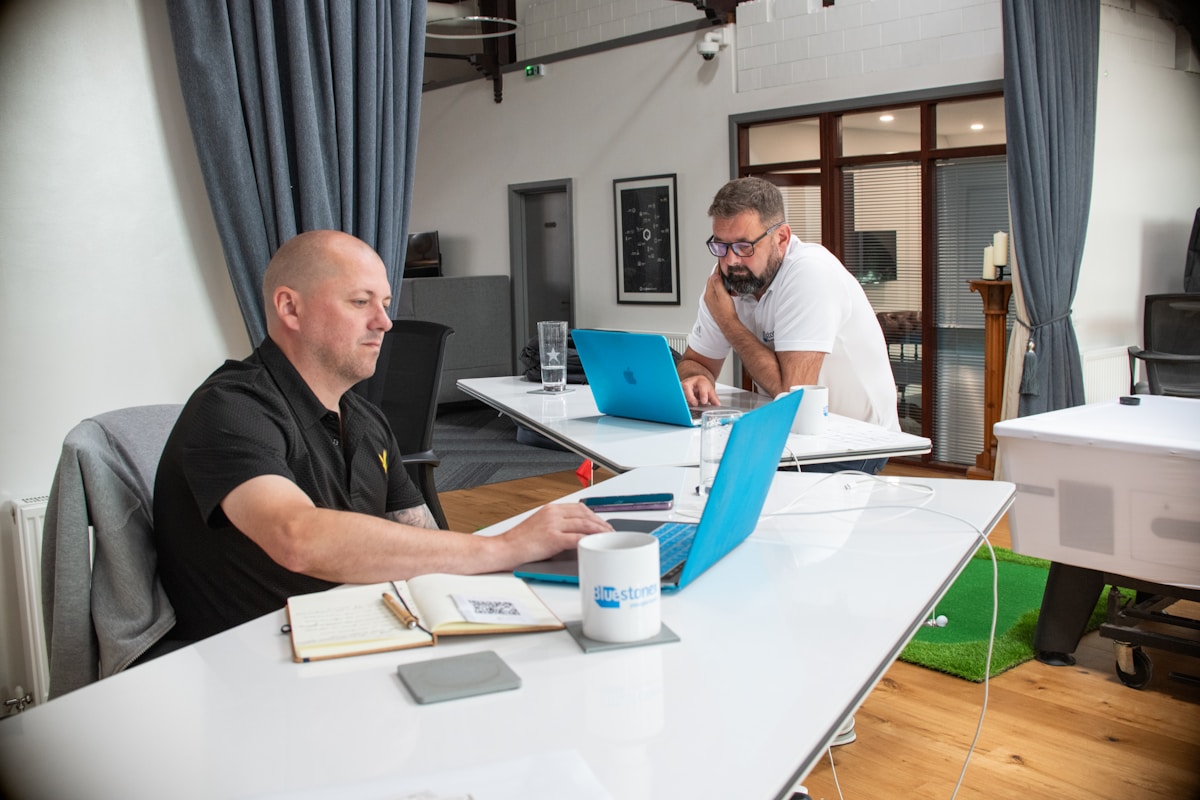
Header photo by Bluestonex on Unsplash

.png)
.webp)
“Thank you for setting the great foundation for my promotion; now I have a plan!"


Curious to see how AI Coaching can 10X the impact and scale of your development initiatives. Book a demo today for: