
AI coaching transforms performance reviews from annual compliance exercises into continuous development cycles by providing managers with real-time guidance, data synthesis, and practice opportunities. The technology addresses a persistent gap: most performance management systems store data and orchestrate workflows, but they don't teach managers how to prepare effective feedback or conduct difficult conversations.
AI coaching provides managers with just-in-time support for preparing evaluations, conducting conversations, and following through on development plans. Unlike traditional performance management tools that store data, AI coaching actively guides managers through the thinking, writing, and conversation skills required for effective reviews.
Modern AI coaching platforms join meetings to observe team dynamics, interview managers about their direct reports using competency-aligned questions, and draft reviews incorporating context from past conversations throughout the year. The platforms build organizational memory of team interactions, enabling them to reference specific examples from actual work rather than relying solely on manager recall.
How AI coaching supports the review cycle:
• Preparation support: AI interviews managers about each direct report, prompting reflection on specific examples aligned with organizational competencies
• Draft generation: Based on manager input and contextual knowledge from previous interactions, AI generates initial review drafts that managers refine
• Conversation practice: Managers rehearse difficult feedback conversations with AI simulating team member responses
• Real-time guidance: During actual review meetings, AI provides coaching on communication patterns and bias signals
• Follow-through: Post-review, AI helps managers translate feedback into actionable development plans and tracks progress
According to Qualtrics research across millions of employees, manager feedback solicitation frequency is the strongest predictor of overall manager effectiveness. AI coaching enables this continuous dialogue by reducing the friction of preparing for and conducting meaningful conversations.
AI coaching delivers continuous, contextual support throughout the review cycle. Traditional performance management systems like Workday, Lattice, and SuccessFactors excel at workflow orchestration and data storage but provide minimal guidance on what makes feedback effective or how to deliver it skillfully.
The gap between having a review form and conducting a development conversation that actually changes behavior is where AI coaching creates value. Managers have access to templates and historical data, but often lack the coaching support to translate that information into actionable feedback delivered with skill.
Data Breakdown:
• Dimension: Availability | Traditional PM Systems: Business hours, scheduled cycles | Human Coaching Only: Limited to executive tier | AI Coaching Platforms: 24/7 for all managers
• Dimension: Cost per manager | Traditional PM Systems: $50–200/year (platform) | Human Coaching Only: $3,000–15,000/year | AI Coaching Platforms: $30–100/year
• Dimension: Context awareness | Traditional PM Systems: Form fields only | Human Coaching Only: Deep but infrequent | AI Coaching Platforms: Continuous observation of actual work
• Dimension: Skill building | Traditional PM Systems: Templates and examples | Human Coaching Only: High-touch, slow | AI Coaching Platforms: Embedded in workflow, scalable
• Dimension: Bias detection | Traditional PM Systems: Limited (flagging language) | Human Coaching Only: Inconsistent | AI Coaching Platforms: Real-time pattern recognition
• Dimension: Manager preparation time | Traditional PM Systems: 3–5 hours per review | Human Coaching Only: 1–2 hours with coach support | AI Coaching Platforms: 45–90 minutes with AI support
AI coaching platforms can reduce bias through real-time pattern recognition and consistent application of evaluation criteria. Traditional systems flag problematic language after it's written. AI coaching guides managers toward better language choices during the drafting process.
HR leaders should evaluate five capabilities that separate effective AI coaching from basic chatbots: proactive engagement, contextual memory, culture alignment, workflow integration, and privacy protection. Most AI tools fail because they lack one or more of these elements, forcing managers to context-switch and duplicate effort rather than saving time.
Proactive vs. reactive: Does the AI join meetings and provide feedback without being asked, or does it require managers to remember to use it? Tools that wait for managers to initiate interactions create friction and low adoption. Effective platforms join meetings automatically and send proactive feedback afterward.
Contextual memory: Can the AI reference past conversations about team members, or does every interaction start from scratch? Generic chatbots lack organizational memory. Purpose-built coaching platforms build knowledge graphs of relationships and communication patterns over time.
Culture alignment: Is the coaching trained on your leadership competencies and values, or generic advice? The most effective platforms are customized to reinforce specific organizational cultures and trained by certified coaches, not just large language models.
Integration depth: Does it live in Slack or Teams where managers work, or require switching to another platform? Context-switching kills adoption. Effective solutions embed directly into daily workflows.
Privacy architecture: Is it SOC2 compliant with guarantees never to train on your data? Privacy-first architecture builds trust with both managers and employees.
The difference between AI coaching that becomes a daily resource and one that collects digital dust comes down to whether the platform knows your people, your values, and how work actually happens in your organization.
Organizations embed AI coaching at four key moments in the review cycle: pre-review preparation (2–3 weeks before), draft creation (1 week before), conversation delivery (during reviews), and development follow-through (ongoing post-review). This phased approach ensures managers build skills progressively rather than facing a learning cliff during peak review season.
Phase 1 — Pre-review preparation: AI interviews managers about each direct report using competency-aligned questions, surfaces forgotten examples from meeting transcripts, and identifies potential blind spots or bias patterns. This structured reflection helps managers recall specific moments that demonstrate performance against organizational values.
Phase 2 — Drafting: AI generates initial review drafts incorporating manager input and contextual knowledge, flags vague language or missing specificity, and suggests concrete examples from observed work. Managers refine these drafts rather than starting from blank pages.
Phase 3 — Delivery: Managers practice difficult conversations with AI simulating team member responses. Since the AI has observed meetings with those team members, it can simulate realistic responses based on communication patterns. During actual review meetings, managers receive real-time feedback on communication patterns.
Phase 4 — Follow-through: AI helps translate review feedback into development plans, sends proactive reminders about commitments, and tracks progress on goals throughout the quarter. This continuous reinforcement prevents reviews from becoming isolated events disconnected from daily work.
The key is treating AI coaching as a development enabler within a hybrid model where AI handles routine coaching and humans make final judgments.
Effective AI coaching for performance reviews requires purpose-built infrastructure that generic AI tools lack: organizational memory, competency alignment, and behavioral observation capabilities. ChatGPT and similar general-purpose tools can't reference your last conversation with a team member, don't know your leadership competencies, and have no context about actual work happening in your organization.
Why purpose-built solutions outperform generic tools:
Generic AI tools start every conversation from scratch. Purpose-built coaching platforms build memory of relationships, past feedback, and development goals. When a manager asks for help with a performance review, the AI can reference specific examples from meetings it attended throughout the year.
Generic tools provide one-size-fits-all advice. Purpose-built platforms are trained on your specific leadership competencies and values, customized to reinforce organizational culture.
Generic tools require managers to describe context manually. Purpose-built platforms observe actual work by joining meetings and tracking conversations. This eliminates the need for managers to summarize situations before getting coaching.
AI coaching reduces bias by providing consistent evaluation criteria, flagging language patterns associated with bias, and prompting managers to provide specific examples rather than general impressions.
Three mechanisms for bias reduction:
Pattern recognition: AI identifies when managers use different language or standards for different demographic groups. For example, if a manager consistently describes women as "supportive" and men as "strategic," the AI flags this pattern and suggests more specific, behavior-based language.
Specificity prompts: Vague feedback often masks bias. AI coaching pushes managers to replace general impressions ("strong leadership presence") with concrete examples ("led the Q3 planning meeting by soliciting input from all stakeholders before proposing a direction").
Consistency checks: AI compares how managers evaluate different team members against the same competencies, flagging inconsistencies. If one employee receives detailed feedback on "strategic thinking" while another receives only a rating, the AI prompts for more balanced documentation.
AI coaching intervenes during the drafting process, not after reviews are complete. This enables managers to correct bias before it becomes part of the official record.
The most common integration challenges are data access, change management, and measuring impact. Organizations that address these proactively see faster adoption and stronger outcomes.
Data access: AI coaching requires integration with HRIS systems, calendar tools, and communication platforms. Heavily regulated industries like healthcare and financial services move more cautiously on data sharing. The solution is starting with opt-in pilots that demonstrate value before expanding access.
Change management: Managers accustomed to traditional review processes may resist AI-assisted approaches. The solution is positioning AI coaching as a development tool, not a surveillance system. Organizations that frame AI coaching as support rather than monitoring software see higher adoption.
Measuring impact: Traditional metrics (time to complete reviews, completion rates) don't capture whether AI coaching improves manager effectiveness. Better metrics include feedback specificity scores, manager confidence ratings, and direct report perception of manager improvement.
Organizations that succeed treat AI coaching integration as a product launch, not a technology deployment. They build cross-functional teams including HR, IT, and business leaders, run structured pilots, and iterate based on user feedback.
• AI coaching transforms performance reviews from annual events into continuous development cycles by providing managers with preparation support, draft generation, conversation practice, real-time guidance, and follow-through tracking
• Purpose-built AI coaching platforms outperform generic AI tools because they build organizational memory, align with specific competencies, and observe actual work through meeting participation
• Effective AI coaching requires five capabilities: proactive engagement, contextual memory, culture alignment, workflow integration, and privacy protection
• The strongest outcomes come from hybrid models where AI handles routine coaching and humans make final judgments, treating AI as a development enabler rather than a replacement for human oversight
• Common integration challenges include data access, change management, and measuring impact—all addressable through structured pilots and cross-functional teams
See how Pinnacle's AI coaching works inside Slack and Teams to provide managers with real-time coaching during performance reviews and throughout the year. Visit heypinnacle.com to learn more.
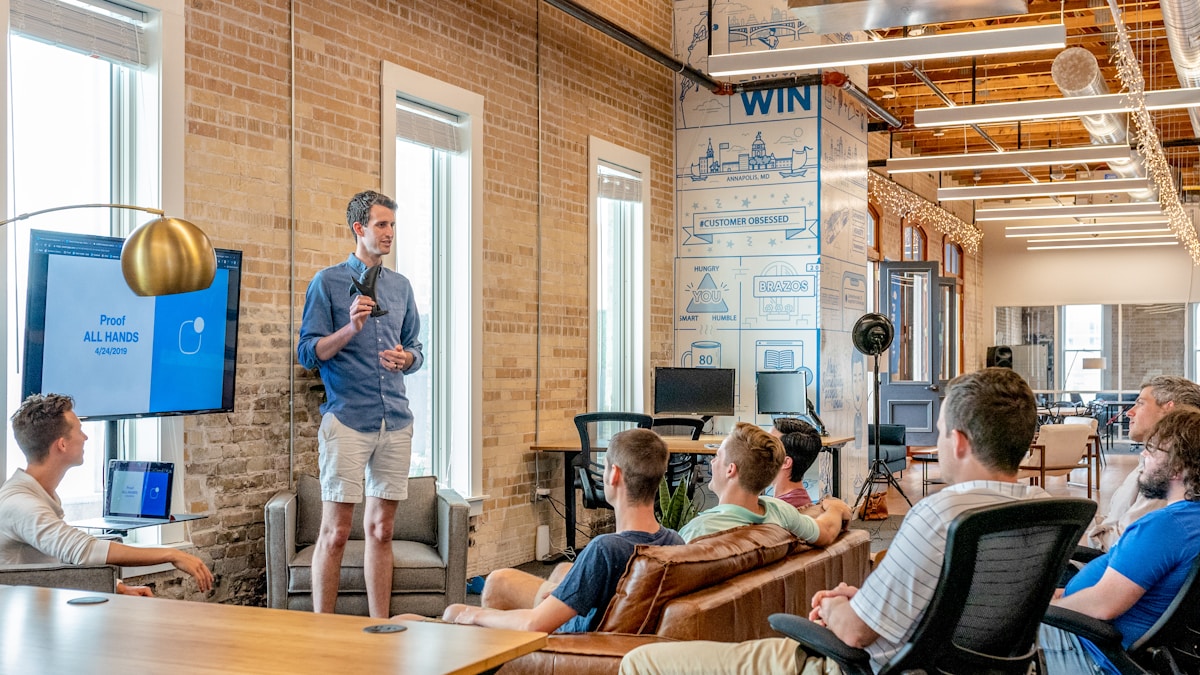
Header photo by Austin Distel on Unsplash

.png)
.webp)
“Thank you for setting the great foundation for my promotion; now I have a plan!"


Curious to see how AI Coaching can 10X the impact and scale of your development initiatives. Book a demo today for: