

Always-appropriate coaching means your AI coach shows up when it is wanted, in the right channel, at the right depth, and with respect for a manager’s focus time. That is the core shift: not more coaching, but better timing and better judgment.
Always-on manager coaching can sound attractive, but it can quickly become one more stream of noise. HR and L&D leaders want a manager effectiveness program that is present inside tools like Slack and Teams. At the same time, managers are already buried under alerts, meetings, and “quick reminders.” Adding nonstop AI nudges on top of that can backfire fast.
We frame the solution as “always-appropriate” coaching. It matters most in high-pressure periods like mid-year season, when reviews, promotion talks, and H2 planning all hit at once. That is where we focus Pascal, our AI coaching platform at Pinnacle: strong governance, not just strong content.
We think about governance as real rules, not a vague “we will be thoughtful.” Cadence, escalation, opt-outs, and signal thresholds work together so AI coaching stays continuous but humane. Instead of simply turning the system up or down, we design how it behaves in the flow of work, all year long.
Always-on just says the system is awake. Always-appropriate says the system knows when to speak and when to stay quiet. For a manager effectiveness program to last, AI has to feel more like a thoughtful coach and less like a pushy notification feed.
We shape that behavior through four main levers:
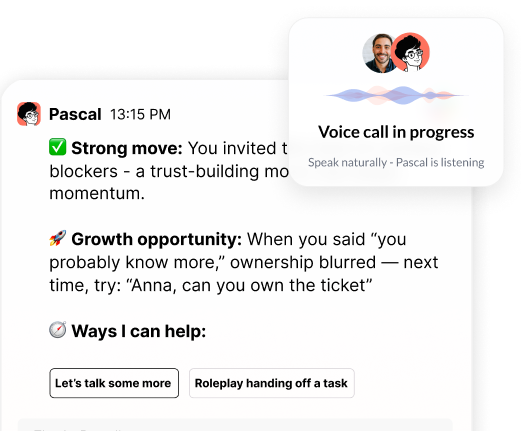
When these four work together, the program shifts from “constant nudges” to a curated stream of high-signal support. For example, a VP of Engineering in a high-pressure product launch window might see fewer generic check-in prompts, but gets one focused coaching moment before a tough skip-level meeting. That message can pull in context from recent incidents, suggest questions to ask, and offer short role-play, all inside Slack or Teams.
Always-appropriate coaching respects that attention is limited, and that not every small event needs AI commentary.
Cadence controls set the rules for how often Pascal can reach out, what time of day is fair game, and how messages group together inside Slack, Teams, and 1:1 prep.
Strong cadence patterns usually include:
Take a sales director in Q3 planning. Activity spikes: pipeline reviews, late-stage deals, new targets. Without cadence controls, they might get several small pings about separate deals, forecast quality, and 1:1s. With Pascal’s governance, they get one integrated message that:
Instead of five interruptions, they get one clear coaching moment that respects their time. HR and L&D teams document these cadence policies and share them openly with managers. When people understand what to expect, AI feels less like another pop-up and more like a stable part of how the company supports leaders.
Not every situation needs the same level of help. Escalation rules decide when Pascal stays light, when it goes deep, and when it says “you should pull in HR or a human coach.”
We see three big patterns here:
Sensitive topics like performance issues, potential compliance concerns, or serious conflict do not get handled as casual tips. Instead, Pascal can move into guided flows with:
A first-time manager preparing for a layoff-related conversation, for example, should not get the same light nudge as a seasoned VP. The newer manager might receive a structured path, reminders about empathy and clarity, and a strong suggestion to partner directly with HR. Channel matters too. During a live meeting, Pascal stays concise and non-intrusive. Before or after the meeting, it can offer deeper coaching, reflection questions, or role-play practice.
These escalation rules protect both people and trust. They show that AI coaching is part of a responsible manager effectiveness program, not an off-the-cuff advice bot.
Trust grows when managers feel that AI respects their judgment, privacy, and time. That is where signal thresholds and opt-outs come in.
Signal thresholds define what patterns are “interesting enough” for Pascal to act on. Instead of reacting to every small blip, Pascal waits for meaningful combinations:
On the human side, opt-outs and quiet modes give managers real control:
Think about a product manager in a crunch week for a big release. They might snooze general leadership tips like “try a new feedback framework” and block nudges during core focus hours. Still, Pascal is allowed to surface a high-severity signal, like a pattern of canceled 1:1s with the same direct report who has raised concerns. That is the difference between turning coaching off and shaping it.
Importantly, opt-outs are guardrails, not exits. Managers stay in the wider manager effectiveness program, while fine-tuning how and when AI shows up for them.
Inside a large company, AI coaching does not live in a vacuum. HR, Legal, IT, and often Works Councils all care about how the system runs, not just what the coaching says.
We see a few governance pieces that matter a lot:
With Pascal, customer data is not used to train models. HR and IT can define what is logged, what is temporary, and how long data is kept. Sensitive subjects can be tagged as “no-go” topics, so if managers ask Pascal about benefits questions, medical issues, or legal details, it redirects them to official HR resources instead of guessing.
Regional rules also matter. A global retail company, for example, might:
When these rules are clear, AI coaching becomes a durable layer in the organization, not just another point tool. Governance is what lets an always-on system stay always-appropriate, even as seasons, business cycles, and teams change.
If you are ready to help your managers lead with more clarity, consistency, and confidence, our AI-driven tools can make the difference. At Pinnacle AI, we combine proven leadership best practices with real-time coaching so your managers build the habits that actually move performance. Explore how our manager effectiveness program equips leaders to navigate tough conversations, develop their teams, and hit ambitious goals. Take the next step to turn everyday management moments into a powerful driver of culture and results.
Author: Pascal

.png)
.webp)
“Thank you for setting the great foundation for my promotion; now I have a plan!"

Curious to see how AI Coaching can 10X the impact and scale of your development initiatives. Book a demo today for: