

Organizations should choose embedded leadership coaching when they want managers to apply guidance in real work, rather than put development off for a separate platform, course, or appointment. The main question is not whether coaching matters. It is where and when managers can use it.
A manager rarely needs help at a convenient time. They need it before a difficult performance conversation, while responding to tension in a team channel, or when planning a 1:1 with an employee who is missing expectations. As late-year planning begins, we recommend evaluating manager development through five lenses: adoption, in-the-moment usefulness, scalability, privacy, and the role human coaching should play.
Standalone leadership coaching is a separate destination. It may be a coaching portal, course library, external app, scheduled session, or cohort program. This approach can work well when leaders have protected time for reflection, a structured learning path, or a planned conversation with a human coach.
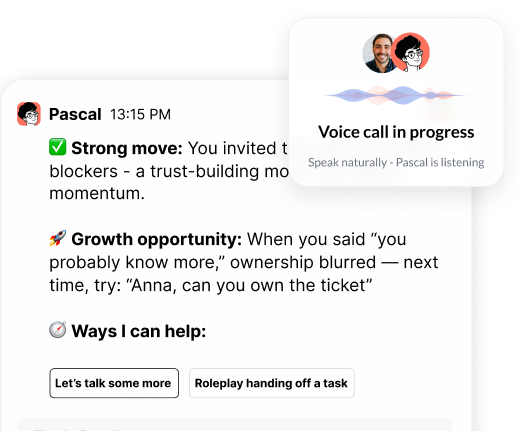
Embedded coaching meets managers in the places they already lead: Slack, Microsoft Teams, 1:1 preparation, and meetings. It is not simply a course library placed inside a chat tool. It provides situational guidance, feedback, and practice when a real leadership moment is close at hand.
Consider a VP of Engineering with 12 direct reports who needs to address missed commitments before a product milestone. A standalone tool can help if that leader has time to stop, log in, and search for guidance. Embedded coaching can help them prepare talking points, role-play possible responses, and refine follow-up actions in the same workflow where the issue is unfolding.
The distinction is simple:
Leadership coaching without switching apps matters because development is more likely to be used when it fits naturally into a manager’s workflow. Friction is not only a motivation problem. More often, it is a timing and access problem.
Context switching has a real cost. A manager may fully intend to open a coaching module after a meeting, but urgent messages, calendar changes, employee questions, and decisions quickly take priority. By the time they return to the topic, the moment may have passed and the details may be less clear.
In practice, embedded support can look like this:
We built Pascal to provide real-time leadership support inside the flow of work. The aim is not to add another development task. It is to help managers turn coaching into a repeatable leadership habit.
Standalone coaching can be the better choice when the goal requires protected time, sustained reflection, or a structured learning experience. Executive coaching engagements, leadership offsites, certification programs, cohort development, and long-form skill building all benefit from focused attention.
That does not make the choice absolute. Human coaches, workshops, and dedicated learning programs can bring depth, accountability, and peer connection that matter greatly. Embedded AI coaching can complement those investments by helping managers apply what they learned between sessions, when the next difficult conversation arrives.
For HR and L&D leaders, the useful question is: Is the primary need planned development, immediate support during leadership moments, or both? Separate experiences can be harder to adopt consistently across broad manager groups, especially when frontline and mid-level managers spend their days in meetings and responding to operational demands. Without an embedded option, development can become concentrated among senior leaders or the most motivated participants.
Embedded coaching scales when every manager can access practical, context-aware support without depending on a limited pool of human coaches for every routine challenge. Scale should broaden access without reducing the care and thoughtfulness that leadership development requires.
Across functions, regions, and management levels, the need is consistent even when the situations differ. A first-time manager may need help preparing for feedback. An experienced director may want to sharpen a message about organizational change. Both can benefit from support in the environments where they already communicate and lead.
The capabilities that matter at scale include real-time coaching nudges, communication feedback, 1:1 preparation, and AI role-play for difficult conversations. These tools help managers practice judgment and communication. They do not replace human relationships, organizational policies, or expert advisors.
Enterprise requirements also belong in the decision. We encourage leaders to ask:
At Pinnacle, customer data is never used to train models. That gives enterprises a privacy-conscious way to expand access to coaching while keeping sensitive information separate from model training.
Choose standalone coaching when leaders need dedicated space for deep reflection, structured development, or high-touch human coaching. Choose embedded coaching when you want more managers to handle daily leadership moments with timely, practical support. For many organizations, the strongest approach combines both.
As you review manager development investments, identify the moments that most affect team performance, retention, and clarity. Then ask whether managers can get support when those moments arise, whether coaching works in Slack, Teams, 1:1s, and meetings, and whether privacy expectations are met. The right model is the one that helps leadership coaching happen where leadership actually happens.
See how leadership coaching without switching apps can help managers prepare for difficult conversations, respond to team challenges, and build stronger habits in their daily work. At Pinnacle, we deliver real-time guidance and role-play where managers already communicate and lead. Explore the practical considerations for bringing scalable, enterprise-ready coaching to every level of leadership.



“Thank you for setting the great foundation for my promotion; now I have a plan!"

Curious to see how AI Coaching can 10X the impact and scale of your development initiatives. Book a demo today for: