

AI coaching platforms can operate in regulated industries when they implement zero-day data retention (immediate deletion of conversation transcripts after processing), SOC2 compliance, and granular privacy controls. The key is choosing a product built for compliance requirements from the start.
Regulated industries require stricter data governance than consumer AI tools provide. Life sciences, financial services, and healthcare organizations face legal liability if coaching data is mishandled.
The difference starts with data retention. Consumer AI tools store conversation history indefinitely. Enterprise platforms built for regulated industries can delete meeting transcripts immediately while extracting behavioral insights. This allows organizations to benefit from AI coaching without storing sensitive conversations.
Security certifications separate enterprise platforms from consumer tools. SOC 2 compliance (a third-party audit of security controls, data handling, and privacy practices) provides validation that the platform meets enterprise security standards. Healthcare organizations must consider HIPAA, financial services need FINRA compliance, and life sciences companies face FDA data integrity requirements.
Risk tolerance creates adoption speed differences. Professional services and tech companies adopt AI coaching faster than regulated industries, which require longer evaluation cycles and legal review. Integration limitations compound the challenge. Regulated companies often prohibit meeting recording tools, requiring AI coaching platforms to function through alternative data sources like Slack, Teams, or approved note-taking integrations.
AI coaching delivers 24/7 support at lower cost while maintaining compliance through configurable guardrails. Traditional executive coaching restricts access to senior leaders due to cost. AI coaching democratizes access across management levels.
The critical difference in regulated industries is that AI platforms can be configured with organization-specific controls. Platforms can flag sensitive topics and escalate to HR when appropriate.
Real-time support changes when coaching happens. Some AI platforms join meetings and provide immediate feedback during critical moments, while human coaches offer delayed guidance days or weeks later. This timing matters for new managers handling difficult conversations or performance issues.
Data insights create organizational value beyond individual development. AI coaching can generate anonymized, aggregated insights into organizational trends and training needs, continuous analysis that human coaching cannot provide at scale.
Organizations use AI coaching for day-to-day manager support while reserving human coaching for executives and complex situations requiring nuanced judgment.
Before implementing AI coaching in regulated industries, evaluate data retention policies, security certifications, escalation protocols, integration compatibility, and vendor commitments on data usage.
| Compliance Consideration | Key Requirements | What to Verify |
|---|---|---|
| Data Retention and Residency | Configurable retention policies, immediate deletion options, geographic compliance | Retention policy flexibility, data storage locations, detailed data flow diagrams |
| Security Certifications | SOC 2 baseline, industry-specific certifications | HIPAA, ISO 27001, FedRAMP compliance, penetration testing results, incident response procedures |
| Sensitive Topic Escalation | Automated flagging and routing of sensitive issues | Harassment, discrimination, mental health crisis detection, HR escalation workflows, termination redirects |
| Integration Flexibility | Function without prohibited tools, approved stack compatibility | Non-recording operation capability, approved integrations, API security protocols |
| Data Usage Policies | No customer data in model training, clear anonymization standards | Model training policies, anonymization standards, data sharing policies, third-party access controls |
Data retention and residency form the foundation. Verify the platform offers configurable retention policies, including immediate deletion of transcripts. Confirm data storage locations meet geographic and regulatory requirements. Request detailed data flow diagrams showing how information moves through the system.
Security certifications provide third-party validation. Require SOC 2 compliance as a baseline. Evaluate additional certifications relevant to your industry (HIPAA for healthcare, ISO 27001 for international operations, FedRAMP for government contractors). Review third-party penetration testing results and vulnerability management processes. Assess incident response procedures and breach notification protocols.
Sensitive topic escalation protects your organization. Confirm the platform flags and escalates sensitive topics like harassment, discrimination, mental health crises, and legal issues. Test escalation workflows to ensure they route to appropriate HR personnel. Verify the system redirects managers to HR for terminations and serious performance issues.
Integration flexibility matters in regulated industries. Evaluate whether the platform can function without meeting recording if your organization prohibits it. Confirm integrations with your approved technology stack. Assess API security and data exchange protocols.
Data usage policies determine long-term trust. Verify the vendor never trains AI models on your customer data. Confirm anonymization and aggregation standards for organizational insights. Review data sharing policies and third-party access controls.
Zero-day data retention allows AI coaching platforms to extract behavioral insights from conversations while deleting transcripts immediately. This addresses the tension between learning from interactions and meeting strict data retention policies.
The platform processes meeting transcripts in real-time to identify behavioral patterns, communication styles, and development opportunities. It then deletes the raw transcript while retaining anonymized insights. Organizations avoid storing sensitive conversations that could be subject to discovery, FOIA requests, or regulatory audits.
The compliance benefit extends beyond data storage. Companies in life sciences and financial services can deploy AI coaching without creating compliance liability. Legal teams approve these implementations faster because the risk profile changes when transcripts aren't retained.
What data persists after transcript deletion? The platform stores behavioral patterns (communication frequency, response times, meeting participation), development themes (topics discussed, skills practiced), and coaching recommendations (suggested actions, resources). These insights are anonymized and aggregated across the organization. Individual transcript content is deleted.
Start with security documentation and compliance certifications, then move to data handling policies and escalation protocols. Request SOC 2 reports, penetration testing results, and detailed data flow diagrams. Ask vendors to walk through what data is stored, where it's stored, and how long it's retained.
Test the escalation workflows during evaluation. Present scenarios involving sensitive topics (harassment claims, mental health crises, termination discussions) and watch how the platform responds. The system should flag these situations and redirect to HR. If the platform coaches on terminations or legal issues when it should escalate, that's disqualifying.
Review customer references from similar regulated industries. Ask specific questions about their compliance review process, legal team concerns, and how the vendor addressed those concerns. Request documentation of successful regulatory audits or legal reviews.
Evaluate the vendor's roadmap and commitment to compliance. How quickly do they respond to new regulatory requirements? Do they have dedicated security and compliance personnel? What's their track record of maintaining certifications?
Request a pilot program with clear success metrics. Deploy to a small group of managers in a controlled environment. Monitor adoption, measure value, and validate that compliance controls work as promised before broader rollout.
AI coaching reduces compliance risk when implemented correctly, but it requires integration with your existing compliance framework. The platform should complement your HR policies and leave sensitive judgment calls to people.
Configure organization-specific guardrails that reflect your compliance requirements. Customize moderation flags, escalation triggers, and content filtering based on your industry and risk tolerance to ensure the AI coaching aligns with your existing policies.
Use aggregated insights to identify compliance training needs. Anonymized data from AI coaching interactions reveals patterns in manager challenges, skill gaps, and potential risk areas. This information helps you stage proactive interventions before small issues become compliance problems.
Establish clear escalation paths from AI coaching to HR business partners. When the platform flags sensitive topics, ensure your team has protocols for rapid response. The AI coach should be one part of a wider support system that includes your HR team.
Document your AI coaching implementation for auditors. Maintain records of vendor security certifications, data handling agreements, and compliance controls. This documentation demonstrates due diligence in protecting sensitive information while enabling manager development.
• AI coaching platforms can operate in regulated industries through zero-day data retention, SOC2 compliance, and granular privacy controls that consumer AI tools cannot provide
• Five critical compliance considerations determine vendor selection: data retention policies, security certifications, escalation protocols, integration flexibility, and commitments on data usage
• Zero-day transcript retention allows platforms to extract behavioral insights while immediately deleting raw conversation data, addressing the compliance tension in regulated industries
• Successful implementation requires configuring organization-specific guardrails, establishing clear escalation paths to HR, and integrating AI coaching into your broader compliance framework
• Vendor evaluation should include testing escalation workflows, reviewing customer references from similar regulated industries, and running a pilot program with clear success metrics
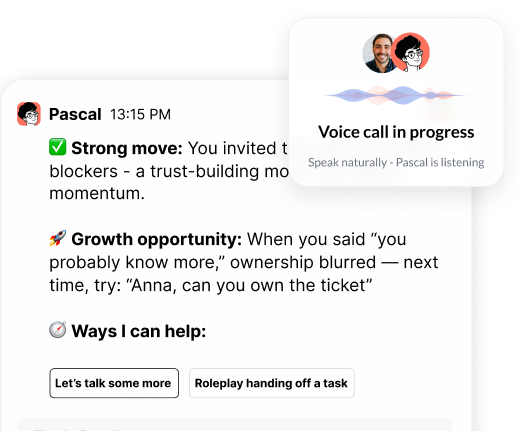
Pascal is built for the security and compliance needs of regulated industries. He offers zero-day transcript retention and custom data retention settings, so you decide how long his memory holds information. Pinnacle has SOC 2, and our 2026 audit is finishing up.
See how Pascal works inside Slack and Microsoft Teams at https://www.heypinnacle.com.
Header photo by Campaign Creators on Unsplash



“Thank you for setting the great foundation for my promotion; now I have a plan!"

Curious to see how AI Coaching can 10X the impact and scale of your development initiatives. Book a demo today for: