What CHROs Miss About Scaling Coaching
HR leaders feel the squeeze right now. Midyear reviews are meeting next-year planning, and everyone wants proof that manager behavior is actually changing, not just that engagement scores look okay on a dashboard.
That is where many coaching strategies quietly stall. Traditional 1:1 coaching and marketplace platforms sound great on paper, but they often move slower than the business. Work changes weekly, people are hybrid, budgets are tight, and the coaching model stays stuck in a world of scheduled sessions and nicely formatted reports.
The real tension in AI coaching vs. BetterUp is not human vs. machine. It is a question of scale and fit. Can your coaching approach keep up with constant change, or is it adding one more layer of meetings and noise?
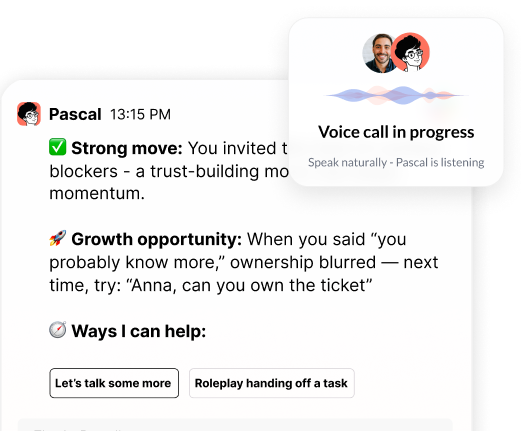
At Pinnacle AI, we built Pascal, an AI-powered coaching platform that sits inside the tools people already use at work. It is designed so every manager and employee can get real-time coaching support in the middle of their actual tasks. Let us look at what HR leaders often miss when they compare traditional coaching models with embedded AI coaching, and how those blind spots show up in adoption, data, and impact.
Why Marketplace Coaching Struggles to Scale Impact
When coaching demand rises, the common move is to add more seats to a marketplace platform. On paper, it looks like scale. In daily reality, the impact often flattens out.
Here is why more licenses do not automatically mean more change:
• Low, uneven usage across teams
• Coaching that happens away from real work context
• Behavior change that stops with a small group of participants
Coaching sessions usually live outside the actual flow of work. A manager has a tough performance conversation on Thursday, then talks about it with a coach the next Tuesday. By then, the moment is gone. Real behavior change needs support before, during, and right after those key moments, not days later.
There is also a ripple problem. Even when a manager gets real insight in a session, it often stays in their head. It does not easily spread to their peers, their team, or your frontline population. You get pockets of growth instead of broad capability.
Then there is the hidden friction. Marketplace models come with:
• Scheduling and rescheduling across time zones
• Meeting fatigue on already full calendars
• Extra links, logins, and systems to remember
Right when managers most need support, like during performance reviews or annual planning, they find themselves juggling yet another recurring meeting. Coaching becomes one more thing to fit in, not a support that fits around the work.
On the data side, marketplace platforms often give you sentiment and satisfaction data, which is fine, but it is hard to connect that to the specific manager behaviors or team patterns your executive team asks about. You see that people feel better, but not clearly how that ties to performance, readiness, or risk.
Inside AI Coaching vs. BetterUp: What Really Changes
AI coaching shifts where and how coaching happens. Instead of being a separate event on the calendar, it can live inside your daily tools like Slack, Teams, email, or performance systems.
That changes a few key things.
First, it is in the flow of work. Managers do not have to wait a week to ask, “How do I give this feedback?” They can paste a draft into Pascal and refine it in minutes. The support sits next to the real work, not in a separate portal.
Second, it is always on, not once a week. High-change seasons bring:
• Org updates and role shifts
• New performance or comp policies
• Shifting goals and priorities
With AI coaching, a manager can get help right before announcing a change to their team, while they are in a heated project thread, or right after they get unexpected feedback from their own leader. The timing makes the coaching stick.
Third, AI can personalize at true enterprise scale. With the right setup, it can factor in role, level, company practices, and goals, so the guidance is specific, not generic. You are no longer forced to choose between depth for a few or reach for many.
The point is not to replace humans. It is to give every manager and employee a real-time copilot, while reserving human coaches for moments that truly need a person.
What Your Data Tells You in Each Coaching Model
Coaching models differ a lot in what they can tell you as an HR leader.
Marketplace-style coaching usually gives you:
• Participation rates
• Satisfaction scores
• General themes from coaching sessions
Helpful, but still pretty high level. It is tough to walk into a talent review and say exactly how coaching is shifting manager habits or team outcomes.
With embedded AI coaching, you can see live patterns in real questions, topics, and sentiment, without exposing any individual’s private content. Aggregate trends can show you:
• Where managers are struggling, like feedback, goal setting, or remote leadership
• Which teams are asking for support on burnout, conflict, or clarity
• How often people are asking about specific policies or processes
Now you can connect coaching activity to metrics that matter, like manager effectiveness scores from your engagement survey, promotion patterns, or turnover trends on key teams. When a region is asking lots of questions about new performance standards, and that same region has slower goal progress, that is a signal you can act on.
This also unlocks precision interventions at scale. Instead of rolling out large, expensive programs to everyone, HR can:
• Target nudges to managers who show specific coaching needs
• Launch short learning paths linked to patterns in AI questions
• Equip HRBPs with sharper insights for the business units they support
You move from “we think coaching is helping” to “here is where behavior is shifting and where it is stuck.”
Manager Experience: From One More Meeting to Trusted Copilot
For managers, the coaching model has to feel like relief, not burden.
Their reality is full: performance calibration, comp planning, midyear check-ins, hiring, and their own day job. Weekly coaching sessions can help, but they also add:
• More time on video calls
• More prep and follow-up work
• More switching between tools
AI coaching changes the shape of support. Instead of saving questions for a future session, managers can get instant, context-aware help for real moments like:
• Drafting performance feedback that is clear and fair
• Preparing for a tough one-on-one with a struggling team member
• Planning a new hire’s first 90 days on a hybrid team
• Running a meeting where half the group is in the office and half is remote
Over time, micro-coaching and nudges help build consistent leadership habits: setting expectations, closing the loop, recognizing wins, following through on commitments. Instead of big “aha” moments that fade, managers practice small behaviors over and over until they become normal.
The result is not just less cognitive and calendar load. It is a shift from coaching as an event to coaching as an everyday partner.
Making the Shift: A CHRO Playbook for Scale
If you are rethinking AI coaching vs. BetterUp style models, it helps to reset your success metrics first. Look beyond participation and satisfaction. Aim for measures like:
• Clear changes in manager behavior
• Internal mobility and readiness for new roles
• Time to productivity for new hires and new managers
• Retention of critical roles and teams
Next, think in terms of blend, not either/or. Human coaches are powerful at key inflection points, like executive transitions or very high-stakes roles. AI coaching can cover day-to-day support for every manager and employee, including those who might never get access to a human coach today.
A smart way to start is with a focused pilot. Many HR teams choose:
• First-line managers who shape most of the employee experience
• New managers taking on people leadership for the first time
• A fast-moving business unit that is under pressure to deliver results
Align the pilot to a period when behavior is on display, like performance or planning cycles, and define clear before-and-after measures. Watch not just for usage, but for the quality of questions, the trends in topics, and how quickly insights help you refine your broader talent strategy.
At Pinnacle AI, we built Pascal to sit inside everyday tools and work side by side with existing programs and platforms. For HR leaders, the real opportunity is not choosing between AI coaching vs. BetterUp. It is designing a coaching ecosystem where embedded AI unlocks scale, insight, and impact that match the pace of your business.
Discover A Smarter Path To Personalized Coaching
If you are weighing your coaching options, our guide to AI coaching vs. BetterUp breaks down the real differences in clarity, cost, and outcomes. At Pinnacle AI, we walk you through how AI-driven support can fit your goals without sacrificing a human touch. Take a few minutes to review the guide so you can make a confident, informed decision about what kind of coaching will actually move you forward.





.png)
.webp)