
AI coaching transforms leadership development by embedding guidance directly into the tools and moments where managers already work—Slack, Teams, Zoom meetings, one-on-ones—rather than requiring them to log into separate platforms or attend scheduled training sessions. This integration eliminates friction, enables proactive support at teachable moments, and drives sustained behavior change through consistent practice in real work contexts.
Quick Takeaway: AI coaching in the flow of work delivers guidance at the exact moment managers need it, when learning sticks best and application is immediate. Organizations embedding coaching into daily workflows achieve 75%+ regular usage compared to 51% for on-demand tools, with measurable improvements in manager effectiveness and team performance.
The challenge facing most organizations is straightforward: traditional manager training delivers content far removed from when managers actually need it. A two-day workshop on feedback skills happens months before a manager faces a difficult performance conversation. By then, the learning has evaporated. The future of leadership development is here, powered by AI coaches that live where work happens, but only when they're designed to meet managers in their actual moments of need.
AI coaching in the flow of work means guidance arrives where managers already spend their time—in communication platforms, during meetings, before difficult conversations—so coaching becomes part of daily routine rather than an additional task requiring setup or remembering. The system embeds directly into Slack, Teams, Zoom, and email instead of standalone portals, delivering feedback immediately after meetings when learning sticks best, not hours later when context has faded.
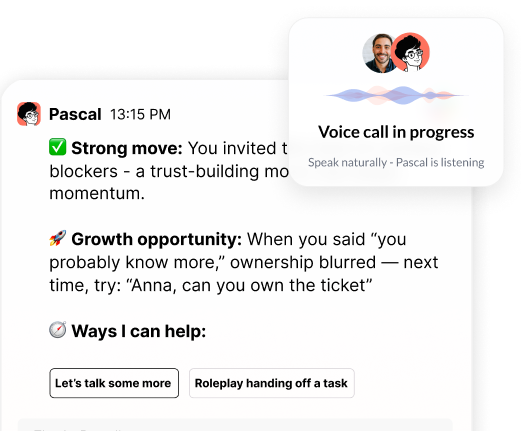
This integration eliminates the friction that kills adoption in traditional learning platforms. Managers don't need to remember they have a coaching tool available. They don't need to explain their situation from scratch to a generic system. Pascal, Pinnacle's AI coach, observes actual team dynamics through meeting integration and provides contextual guidance grounded in real situations. When a manager finishes a team meeting, Pascal surfaces specific feedback within minutes: "Strong move inviting the team to surface blockers. Growth opportunity: when you said 'you probably know more,' ownership blurred. Next time, try: 'Anna, can you own the ticket?'"
Research confirms this approach works. Organizations embedding AI coaching into daily workflow tools achieve 75%+ regular usage, compared to 51% for on-demand tools that require separate logins. The difference isn't marginal. It's the gap between sustained behavior change and abandoned tools.
Proactive coaching surfaces guidance automatically based on observed patterns and upcoming moments, delivering support before managers realize they need help. Reactive coaching waits for managers to remember to ask, which rarely happens when they're busy managing crises. The distinction determines whether coaching becomes habit or remains sporadic.
Proactive systems maintain 94% monthly retention with 2.3 coaching sessions per week per user, while on-demand tools see engagement drop to less than one session per month after initial novelty. This retention gap reflects how adults actually learn. People develop skills through repeated practice in context, not through one-time training events they must remember to access.
The timing advantage of proactive coaching is critical. When a manager struggles with delegation, they need guidance immediately—as they're preparing to assign work or reflecting on a conversation that just happened. On-demand tools require the manager to recognize the problem, remember the tool exists, navigate to it, and articulate the challenge. Each step creates friction that reduces usage.
Proactive systems eliminate this friction by identifying coaching moments automatically. Research shows proactive approaches achieve 40% higher client retention and 60% faster goal achievement compared to reactive models. The consistency creates the habit loops that drive sustained behavior change.
A manager finishes a team meeting where they asked for input but then dismissed concerns without exploring them. Pascal observes this pattern and delivers feedback in Slack within minutes, noting the specific moment where the manager could have strengthened psychological safety. The feedback arrives while context is fresh, motivation to improve is highest, and the manager can immediately apply the insight to their next team interaction.
Before a difficult one-on-one, a manager messages Pascal to get context on the employee's communication style, recent performance feedback, and career goals. Pascal surfaces that this employee values direct feedback but becomes defensive when criticism feels personal. The manager uses this insight to structure the conversation for maximum receptiveness.
During performance review season, a manager struggles with how to frame feedback that's both honest and developmental. Rather than searching for guidance or waiting for an HR meeting, they voice-message Pascal with their draft feedback. Pascal suggests more specific language, helps them practice the conversation through roleplay, and follows up the next day to see how it went.
Weekly, Pascal sends development nudges tied to the manager's goals and team dynamics. If the manager has expressed interest in improving delegation, Pascal proactively surfaces situations where team members could own more work, with specific suggestions for how to structure those conversations.
This integration into daily workflow means 83% of colleagues report measurable improvement in their managers' effectiveness, with highly engaged users seeing a 20% lift in Manager Net Promoter Score. That improvement comes from coaching that's specific, timely, and immediately actionable.
Traditional training delivers content in batches, far removed from when managers need it. AI coaching in the flow of work delivers guidance at the exact moment it's relevant, when application is immediate and learning sticks. The difference in outcomes is substantial.
Traditional programs see 90% knowledge loss within a week because learning happens separately from application. Managers attend a workshop on feedback, return to work, and immediately face competing priorities. The workshop insights evaporate under operational pressure. Traditional manager training keeps falling short because it targets the 10% of learning that happens formally rather than the 70% that occurs on the job.
Flow-of-work coaching addresses the 70% of learning that happens through doing. When a manager prepares for a difficult feedback conversation, Pascal provides specific talking points. When they finish that conversation, Pascal offers reflection on what worked. When they face similar situations in the future, they've built a pattern of effective behavior through repeated practice and feedback.
Scheduled coaching sessions get deprioritized when fires emerge. Proactive AI coaching arrives in existing tools managers already monitor, making it impossible to miss. One tech company using Pascal estimated saving 150+ hours per 50 employees in their initial rollout because managers spent less time searching for guidance and more time applying it.
Purpose-built coaching platforms include escalation protocols that recognize sensitive topics and route them to HR while helping managers prepare for appropriate human conversations. This architecture de-risks AI adoption by ensuring human judgment and legal expertise remain involved in complex situations.
Moderation systems detect toxic behavior or mental health concerns and flag them appropriately. Sensitive employee topics—harassment, medical issues, terminations—automatically escalate to HR teams rather than receiving AI guidance alone. Organization-specific controls let you define which topics the AI coach won't respond to, ensuring alignment with your risk tolerance and legal environment.
Data stored at user level prevents cross-account information leakage. Managers' conversations with Pascal remain completely separate from their reports' interactions, even when Pascal is coaching both parties. The platform never trains AI models on customer data, and all information remains encrypted using enterprise-grade security that meets SOC2 compliance standards.
These guardrails don't limit coaching effectiveness. They enhance trust. Managers engage more deeply with an AI coach when they know inappropriate requests will be handled properly and sensitive situations involve appropriate human expertise.
Where your AI coach lives determines whether managers use it consistently or abandon it within weeks. Platforms requiring separate logins and context-switching face adoption challenges that embedded solutions eliminate. Pascal lives inside Slack, Teams, Zoom, and Google Meet because that's where managers spend their days.
This workflow integration drives the engagement metrics that predict sustained impact. When coaching arrives as a message in the same channel where team discussions happen, managers engage because the friction disappears. When feedback comes after meetings without requiring separate action, managers receive it while context is fresh.
Embedding an AI coach directly into daily workflow tools drives 3-5x higher adoption than standalone portals. Organizations that implement this integration see adoption rates above 80% compared to 15-25% for tools requiring separate logins.
Organizations implementing AI coaching in the flow of work report measurable improvements across multiple dimensions that matter to CHROs. Faster manager ramp time means new managers develop competencies in months rather than years. Higher quality feedback conversations improve performance review consistency across the leadership population. Reduced time to resolve team conflicts prevents issues from escalating into retention risks.
The most compelling outcomes connect coaching activity directly to business results. Organizations using Pascal report that 83% of colleagues see measurable improvement in their managers, with an average 20% lift in Manager Net Promoter Score among highly engaged users. These aren't engagement metrics. They're behavior change indicators that predict retention, team performance, and organizational health.
Time savings compound quickly at scale. One technology company with 50 employees using Pascal estimated saving 150 hours in their initial rollout. Multiply those savings across hundreds or thousands of managers, and the productivity impact becomes substantial. Managers spend less time searching for guidance and more time applying it to real situations.
The competitive advantage of embedding AI coaching into daily workflows becomes clear when you examine the organizations leading through the AI shift. HubSpot, Zapier, and Marriott demonstrate that successful AI adoption depends on meeting employees where they already work rather than requiring new tools and workflows. These organizations achieve adoption rates above 80% and measurable improvements in manager effectiveness because they prioritized integration over features.
The future of manager development isn't periodic training events or separate coaching platforms. It's guidance embedded in the daily rhythm of work, delivered at moments when learning sticks best and application is immediate. Organizations that implement this approach today are building manager effectiveness advantages that competitors relying on traditional models will struggle to match. Book a demo to see how Pascal delivers personalized guidance directly within your team's existing workflows—no separate logins, no context-switching, just coaching where and when managers need it most.

.png)
.webp)
“Thank you for setting the great foundation for my promotion; now I have a plan!"

Curious to see how AI Coaching can 10X the impact and scale of your development initiatives. Book a demo today for: